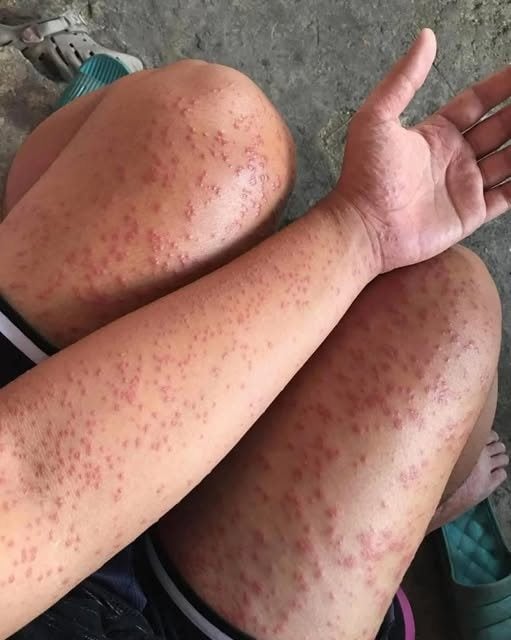
1. WHAT IS OBSERVED IN THE IMAGE (OBJECTIVE DESCRIPTION)
From the image provided, the visible skin findings include:
-
Numerous small red to dark-red spots (macules and papules)
-
Distributed symmetrically on:
-
Thighs
-
Lower arms
-
-
Lesions appear:
-
Mostly pinpoint to a few millimeters
-
Some look flat, others slightly raised
-
Some appear darker, suggesting older lesions or mild bleeding under skin
-
-
No obvious:
-
Large blisters
-
Pus-filled lesions
-
Ulceration
-
-
Skin surface appears intact, not open
-
Distribution is widespread, not localized
This pattern tells doctors important clues:
-
Systemic or widespread cause more likely than a single insect bite
-
Possible inflammatory, allergic, infectious, or vascular origin
2. BASIC SKIN LESION TERMINOLOGY (IMPORTANT TO UNDERSTAND)
Doctors classify rashes based on appearance:
-
Macule: flat colored spot
-
Papule: small raised bump
-
Petechiae: tiny red/purple dots from bleeding under skin
-
Purpura: larger bleeding spots
-
Urticaria: hives (usually itchy, raised, pale center)
The lesions in your image resemble papules + petechiae-like spots, which is important.
3. MAIN CATEGORIES OF POSSIBLE CAUSES
Doctors think in categories, not single diseases at first.
CATEGORY A: ALLERGIC / HYPERSENSITIVITY REACTIONS
1. Drug allergy
Common triggers:
-
Antibiotics
-
Painkillers (paracetamol, ibuprofen, aspirin)
-
Herbal medicines
-
Injections
Features:
-
Appears days to weeks after exposure
-
Symmetrical rash
-
May or may not itch
-
Can involve arms, legs, trunk
⚠️ Serious forms include:
-
Drug-induced vasculitis
-
Drug-induced purpura
2. Contact allergy
-
Soap
-
Detergent
-
Fabric chemicals
-
Creams or oils
Usually:
-
Itchy
-
Limited to contact areas
-
Less likely if rash is everywhere
CATEGORY B: INFECTIONS (VERY IMPORTANT)
1. Viral infections
Some viruses cause diffuse rashes:
-
Dengue
-
Chikungunya
-
Zika
-
Measles (less likely in adults)
-
COVID-related rash
Signs that suggest viral cause:
-
Fever
-
Body pain
-
Headache
-
Fatigue
-
Joint pain
Dengue is especially important in Southeast Asia:
-
Causes petechiae
-
Platelet count drops
-
Rash may worsen after fever phase
⚠️ Dengue warning sign:
If you press a glass on skin and spots do not fade, that may indicate bleeding under skin.
2. Bacterial infections
-
Secondary infections
-
Sepsis-related rash (rare but dangerous)
CATEGORY C: VASCULAR & BLOOD-RELATED CONDITIONS (SERIOUS)
These conditions involve blood vessels or clotting.
1. Vasculitis (inflammation of blood vessels)
This is a key possibility.
Symptoms:
-
Red or purple spots
-
Often on legs
-
Do not disappear when pressed
-
May be painful or burning
-
Can be triggered by:
-
Infection
-
Medication
-
Autoimmune disease
-
Types:
-
Leukocytoclastic vasculitis
-
IgA vasculitis
Associated symptoms:
-
Joint pain
-
Abdominal pain
-
Kidney problems (urine changes)
2. Platelet disorders
Low platelets cause:
-
Easy bruising
-
Petechiae
-
Nose bleeding
-
Gum bleeding
Causes:
-
Dengue
-
Bone marrow problems
-
Autoimmune thrombocytopenia
CATEGORY D: PARASITES / INSECTS
Bed bugs / fleas
-
Clustered bites
-
Often itchy
-
Often linear pattern
-
Usually not symmetrical on both arms and legs equally
Less likely if:
-
No itching
-
No household infestation signs
CATEGORY E: HEAT / SWEAT / FOLLICULAR CONDITIONS
Heat rash
-
Very itchy
-
Small red bumps
-
Appears in hot, humid environment
-
Usually superficial
Folliculitis
-
Around hair follicles
-
Pus-tipped sometimes
-
Not typical petechiae
4. VERY IMPORTANT TEST: “BLANCHING” (PRESS TEST)
Doctors often do this simple test:
-
Press the rash with a finger or glass
-
If it turns white, it’s likely inflammation
-
If it does NOT turn white, it suggests bleeding under skin
Non-blanching rash = more serious
5. QUESTIONS DOCTORS WILL ASK (AND YOU SHOULD CONSIDER)
Answering these helps narrow the cause:
-
Is it itchy, painful, or burning?
-
Did you have fever recently?
-
Any new medicine, injection, or supplement?
-
Any joint pain, muscle pain, or fatigue?
-
Any bleeding from gums or nose?
-
Did it start suddenly or gradually?
-
Is it spreading?
6. WHAT DOCTORS USUALLY DO NEXT
Clinical examination
-
Full skin check
-
Check mouth, eyes, nails
-
Check lymph nodes
Possible tests
(Not always needed, but common if rash is severe):
-
Complete blood count (CBC)
-
Platelet count
-
Liver function tests
-
Dengue test (NS1 / IgM)
-
Urine test (kidney involvement)
-
Skin biopsy (for vasculitis)
7. WHAT YOU SHOULD NOT DO
-
❌ Do NOT self-medicate with steroids
-
❌ Do NOT ignore if it worsens
-
❌ Do NOT scratch (can cause infection)
-
❌ Do NOT assume it’s harmless without evaluation
8. HOME CARE WHILE WAITING FOR MEDICAL CARE
-
Keep skin cool and dry
-
Wear loose cotton clothing
-
Avoid heat and sun
-
Avoid alcohol
-
Drink water
-
Stop non-essential medications (only after doctor advice)
9. WHEN THIS BECOMES AN EMERGENCY 🚨
Go to hospital immediately if:
-
Fever + rash
-
Rash spreading fast
-
Bleeding anywhere
-
Severe weakness
-
Dark urine or low urine
-
Severe abdominal pain
-
Dizziness or fainting
10. SUMMARY (IMPORTANT)
This rash is not normal and should not be ignored.
Most likely categories:
-
Viral infection (especially dengue)
-
Drug or allergic reaction
-
Vasculitis or blood-related issue
Because it is:
-
Widespread
-
Dense
-
Possibly non-blanching
👉 In-person medical evaluation is strongly recommended.