The Mirror in the Menagerie
Our personalities shape how we think, connect, and move through the world. Alongside every strength lives a shadow — the quirks, habits, and blind spots that make us unmistakably human. Learning to see both sides with honesty and humor is part of what deepens self-understanding.
If you’ve ever wondered what your worst flaw might be — or at least the one that quietly shapes how you react — this visual test offers a playful way to explore it. It isn’t scientific, but it can spark a moment of reflection that feels more revealing than expected.
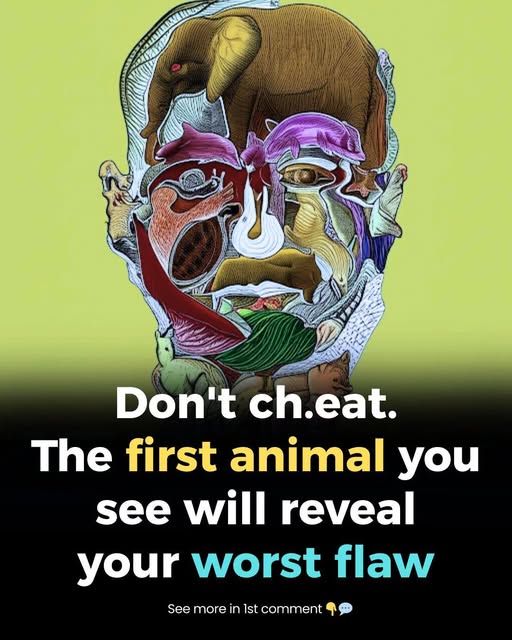
At first glance, the illustration looks like a single human face. Look again, and you’ll notice it’s composed of many overlapping animals, each symbolizing a different imperfection. The exercise is simple: glance once, note which animal you notice first, and resist overthinking. Instinct is the point.
Each creature carries a symbolic weight drawn from old folklore and behavioral metaphor.
-
Elephant — stubbornness, the refusal to budge once you’ve chosen a path.
-
Iguana — emotional distance, the tendency to retreat behind cool detachment.
-
Pig — indulgence or over-comfort; a hunger that doesn’t always know when to stop.
-
Cricket — anxiety, the hum of restless thought that never fully quiets.
-
Horse — pride and independence that sometimes resist guidance.
-
Dolphin — impulsiveness, following feeling faster than reason.
-
Bear — rigidity, protecting order so tightly it becomes a cage.
Other animals broaden the spectrum of human imperfection:
-
Fox for avoidance, slipping away when things get complicated.
-
Rabbit for insecurity, moving softly out of fear of breaking something.
-
Toucan for attention-seeking, shining brightly to hide unease.
-
Kangaroo for inconsistency — jumping between goals without landing.
-
Peacock for vanity; turtle for excess caution; whale for emotional isolation.
-
Gorilla mirrors dominance, duck moodiness, starfish escapism.
Hidden among them are still smaller emblems:
-
Snake for subtle manipulation.
-
Sloth bear for procrastination.
-
Bird for instability — chasing winds instead of building nests.
-
Snail for resistance to change, carrying the old shell everywhere you go.
Together they form a portrait of imperfection that feels oddly tender. The point isn’t diagnosis but discovery.
Your eye tends to settle on the shape that already echoes something in you — perhaps a habit, perhaps an old defense. Whether the symbol feels exact or only approximate doesn’t matter. The value lies in pausing long enough to ask:
“Why that one? What part of me was ready to see it first?”
A single glance can become a small mirror. And sometimes, in noticing the animal we meet at first sight, we take the first step toward befriending the parts of ourselves we’ve long tried to outrun.