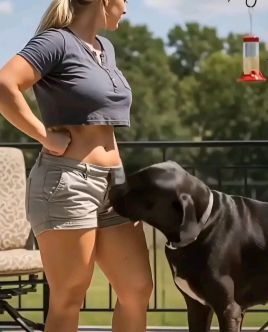
Why Dogs Smell Human Private Areas
The Science, Myths, and What It Really Means
Introduction
Many people feel uncomfortable, embarrassed, or even disgusted when a dog suddenly sniffs their groin or private area. Viral videos and captions often exaggerate this behavior with phrases like “Did you know if a dog smells your parts it means…” followed by misleading or shocking claims.
In reality, this behavior is completely normal for dogs and has nothing to do with sexuality, dirtiness, or moral judgment. It is driven by biology, evolution, and sensory perception, not intent.
To understand why this happens, we must understand how dogs experience the world.
1. Dogs Experience the World Through Smell
1.1 A Dog’s Nose Is Extraordinary
Humans rely primarily on vision, but dogs rely primarily on smell.
-
Humans: ~5–6 million scent receptors
-
Dogs: 220–300 million scent receptors
That means a dog’s sense of smell is 40–60 times more powerful than ours.
Dogs can detect:
-
Hormonal changes
-
Emotional states (stress, fear, excitement)
-
Illness and infection
-
Menstrual cycles
-
Pregnancy
-
Individual identity (your unique scent signature)
To a dog, your scent is your identity.
2. Why the Groin Area Specifically?
2.1 Concentration of Scent Glands
The groin area contains:
-
Apocrine sweat glands
-
Sebaceous glands
-
High hormone concentration
-
Unique bacterial scent profile
These glands release pheromones—chemical signals that dogs are biologically programmed to investigate.
To a dog, this area provides:
-
The most information
-
The strongest scent
-
The clearest “biological profile”
This is the same reason dogs sniff:
-
Other dogs’ rear ends
-
Armpits
-
Feet
-
Used clothing
3. It Is NOT Sexual Behavior
This is one of the biggest misconceptions.
Important clarification:
Dogs are not being sexual or inappropriate.
They are:
-
Gathering information
-
Identifying you
-
Reading your hormonal and emotional state
This behavior is equivalent to:
A human asking “Who are you?”
Dogs don’t have the same social rules or embarrassment triggers humans do.
4. What Information Is a Dog Getting?
When a dog sniffs your private area, it can detect:
4.1 Hormonal Status
-
Ovulation
-
Menstruation
-
Pregnancy
-
Menopause
4.2 Emotional State
-
Anxiety
-
Fear
-
Stress
-
Excitement
4.3 Health Indicators
Dogs can sometimes detect:
-
Infections
-
Diabetes
-
Cancer
-
Hormonal disorders
(Service dogs are trained to do this intentionally.)
4.4 Familiarity
-
Are you someone they’ve met before?
-
Are you part of their social circle?
5. Why Some People Get Sniffed More Than Others
You may notice dogs target certain people more frequently.
Reasons include:
5.1 Height
The groin is at nose level for medium and large dogs.
5.2 Clothing
-
Tight clothing traps scent
-
Synthetic fabrics hold odor
-
Shorter clothing exposes scent more directly
5.3 Hormonal Changes
Dogs are especially curious if:
-
You’re menstruating
-
Pregnant
-
Experiencing hormonal shifts
5.4 Anxiety or Fear
Dogs are drawn to stress hormones like cortisol.
6. Is It a Sign of Poor Hygiene?
No.
Even freshly showered people still emit:
-
Natural pheromones
-
Hormonal scents
-
Individual microbiome odors
This has nothing to do with cleanliness.
7. Dogs Sniff Each Other Even More
Among dogs:
-
Sniffing private areas is normal greeting behavior
-
It replaces human handshakes
-
It conveys age, sex, mood, and health
Dogs simply apply the same instinct to humans.
8. Cultural Perspective: Why Humans Feel Embarrassed
Humans attach:
-
Sexual meaning
-
Social boundaries
-
Shame or modesty
Dogs do not share these concepts.
The discomfort exists only on the human side, not the dog’s.
9. Is It Safe?
Generally:
-
Yes, it’s harmless behavior
-
But boundaries matter
Potential concerns:
-
Personal comfort
-
Children feeling uncomfortable
-
Social situations
10. How to Stop or Prevent It (Politely)
10.1 Train the Dog
Commands like:
-
“Sit”
-
“Leave it”
-
“Down”
10.2 Redirect Attention
-
Offer a toy
-
Use treats
-
Distract calmly
10.3 Body Positioning
-
Turn sideways
-
Step back gently
-
Avoid pushing the dog aggressively
10.4 Owner Responsibility
Dog owners should:
-
Train greetings
-
Keep dogs leashed in public
-
Respect others’ space
11. What NOT to Do
❌ Don’t yell
❌ Don’t hit the dog
❌ Don’t assume bad intent
❌ Don’t shame the owner aggressively
This can increase anxiety-driven sniffing.
12. Myths vs Facts
Myth: Dogs sniff because you’re “dirty”
False
Myth: It’s sexual
False
Myth: Dogs only do this to women
False (men get sniffed too)
Myth: It means something bad about you
False
13. Why This Behavior Goes Viral Online
Social media exaggerates:
-
Shock value
-
Disgust
-
Sexual implication
But the real explanation is biology and instinct, not scandal.
14. When Should You Be Concerned?
Seek help if:
-
Dog shows aggressive behavior
-
Sniffing becomes obsessive
-
Dog ignores commands completely
This may indicate:
-
Anxiety
-
Lack of training
-
Overstimulation
15. Summary
Dogs sniff human private areas because:
-
Their sense of smell is incredibly advanced
-
That area contains strong biological information
-
It is instinctive, not sexual
-
It is normal dog behavior
It does not mean:
-
You’re dirty
-
You smell bad
-
The dog is being “perverted”
-
Something is wrong with you
It simply means:
The dog is being a dog.
Final Thought
Understanding animal behavior helps replace embarrassment with knowledge. When we stop interpreting dog actions through human social rules, we realize most of what they do is neutral, instinctive, and harmless.