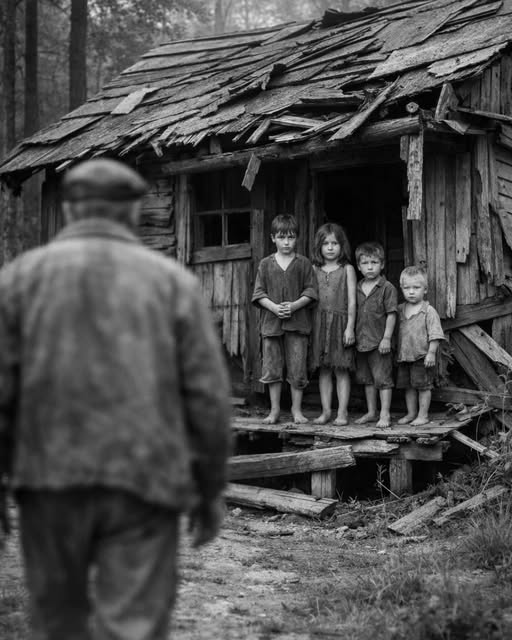
He spent 8 years unjustly imprisoned… Upon returning home, he was devastated by what he saw.
He spent eight years unjustly imprisoned. Upon returning home, he is devastated by what he sees.
Miguel Ramirez never imagined that 8 years of his life would be stolen by a lie.
When he finally managed to prove his innocence and left the industrial colony prison, his hands trembled as he held the papers that testified to the judicial error that had destroyed his family.
He walked slowly along the dirt road that led to his old home in the rural district of Los Pinos.
who began to feel his heart racing.
In the distance, the silhouette of the small wooden building where he had left his wife Patricia and their four young children was visible among the trees. But something was different.
The ceiling was crooked, the paint on the walls had completely peeled off, and there was no sign of life around.
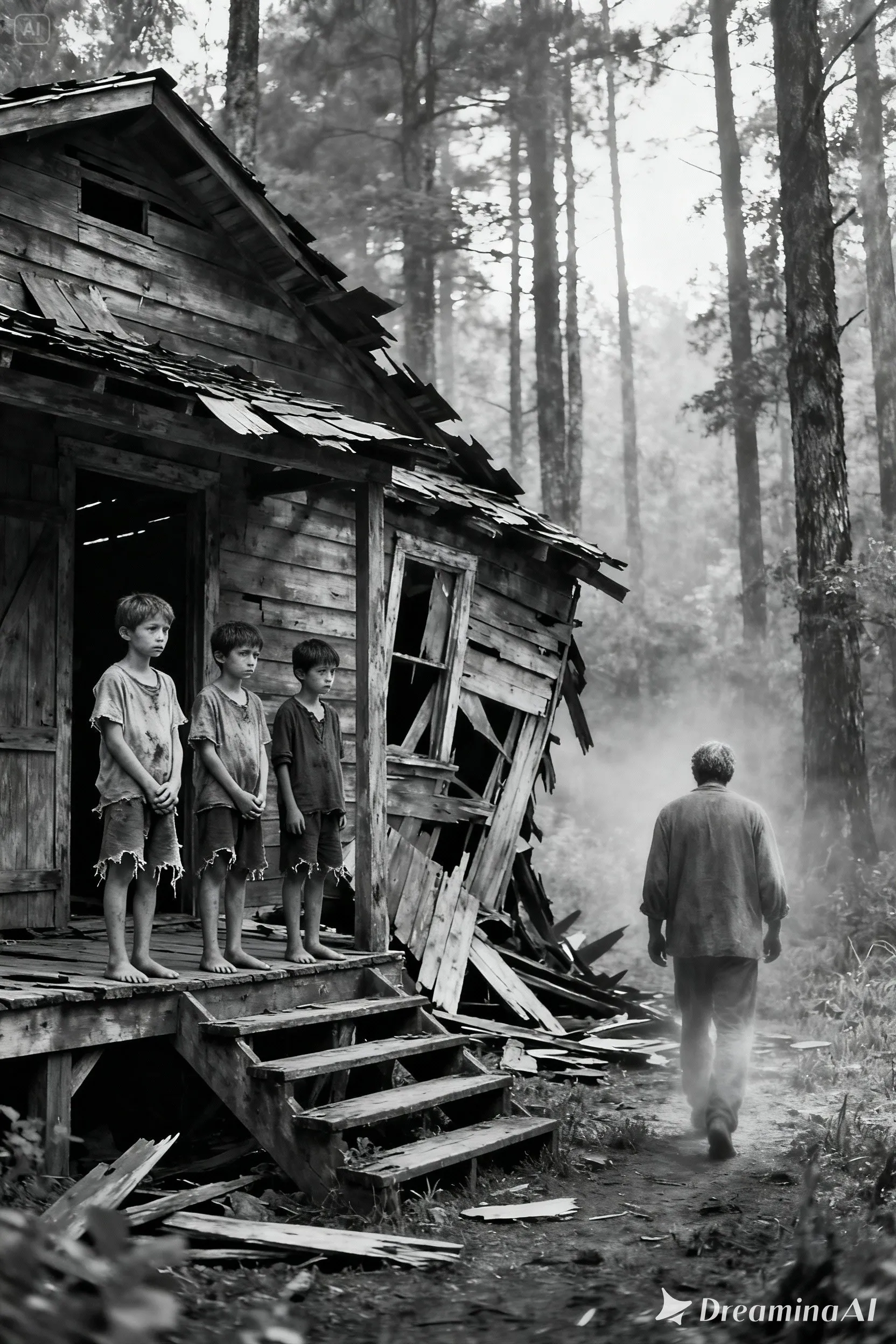
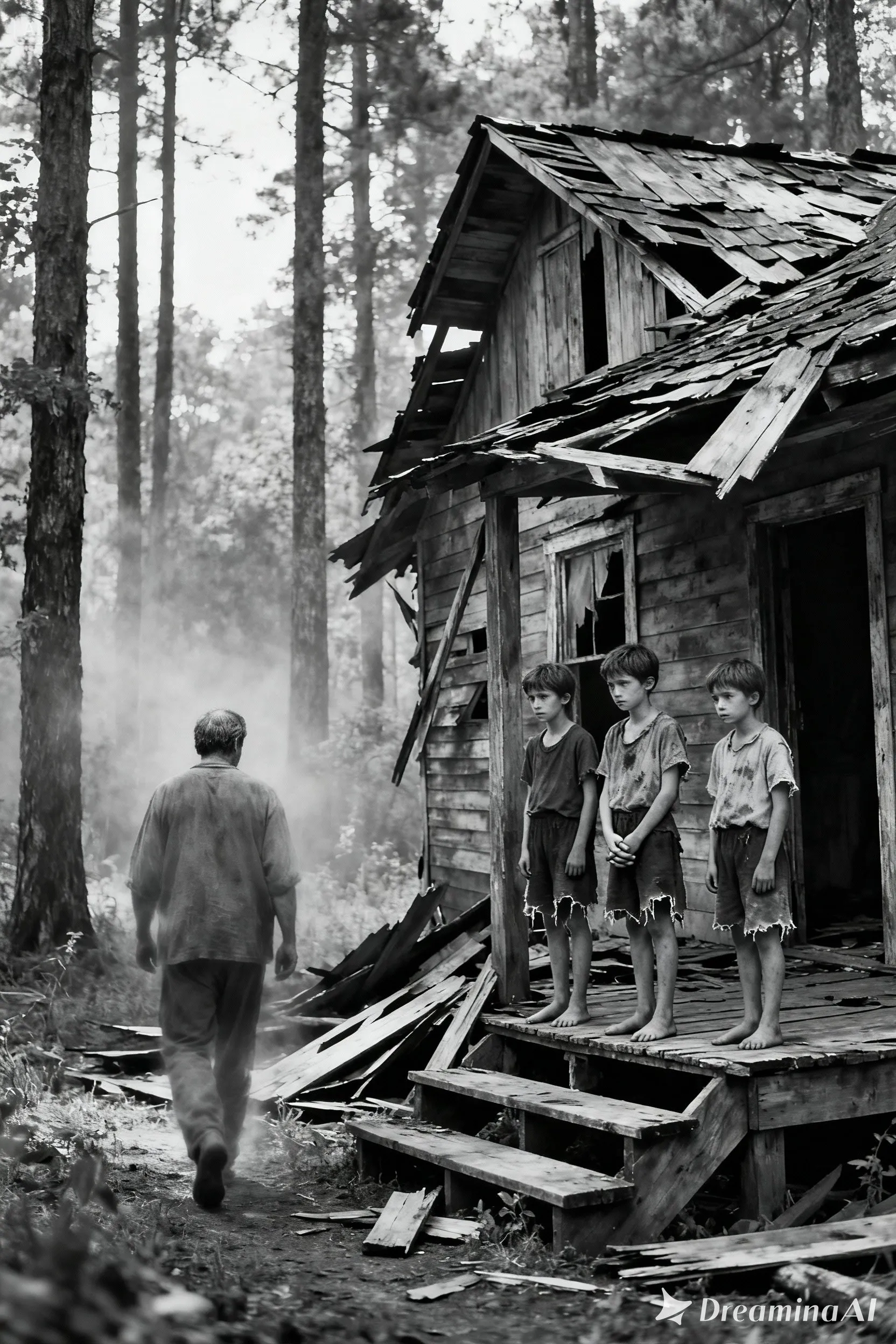
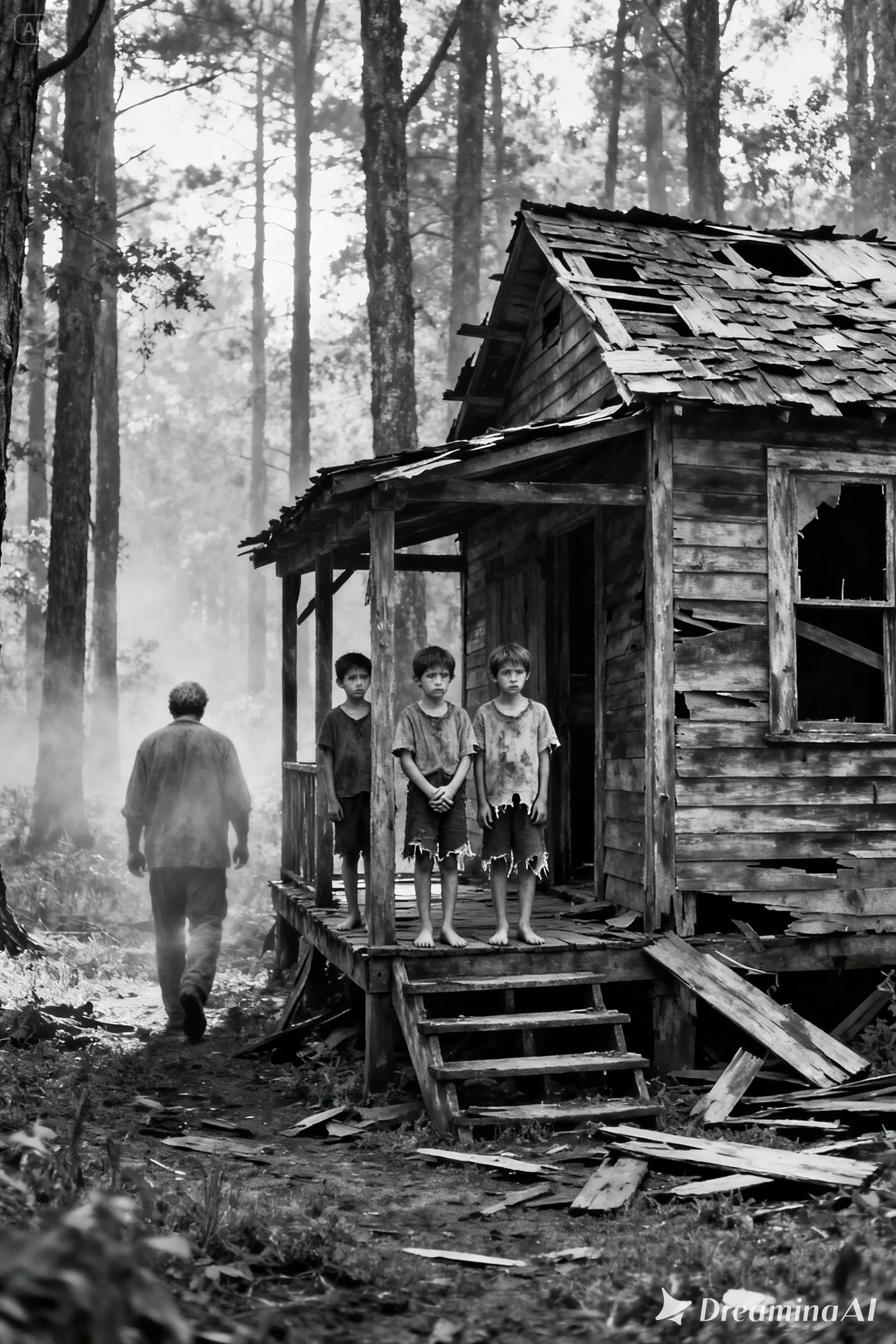
When he got closer and saw four dirty, thin children standing in the doorway of the house that was barely standing, Miguel needed to lean on the rotten wooden door to avoid falling.
The tallest boy, who should be 15 now, looked at him with a mixture of surprise and distrust that cut his heart like a knife.
“Dad,” murmured Alejandro, the eldest son, unable to believe what he saw before his tired eyes.
“Hello, my children,” Miguel managed to say, his voice breaking with emotion at seeing them so changed.
Daniela, who was seven years old when he was imprisoned, was now fifteen and looked older than her age.
The twins, Carlos and Andrés, who were three-year-old babies, were now eleven and looked at him as if he were a stranger.
“Where is your mother?” Miguel asked, noticing the torn clothes, the dirt, and the neglect of days.

“He left two years ago,” Alejandro replied with a harshness that didn’t match his age, “he left us and never came back.”
Miguel felt his legs weaken, because after eight years unjustly imprisoned he was discovering a cruel and recent abandonment.
“How have they lived?” he asked as he climbed the creaking steps, feeling that each step was a blow of reality.
“We manage,” Daniela said defensively, “Alejandro gets odd jobs and I take care of the children and we plant vegetables in the yard.”
Miguel looked at the thin faces and felt pride in their resilience and despair because none of this should have happened.
“Dad, why did you leave us?” asked Andrés, his eyes filled with tears and his voice trembling.
“I didn’t leave, my son, I was arrested for something I didn’t do. I proved my innocence and came back to take care of you,” Miguel explained, kneeling down.
“Lies!” Alejandro shouted angrily. “If you were innocent, you wouldn’t have been in prison for so long. Mom said you were a thief.”
The words hit Miguel like a punch, because Patricia lied to them and made them believe that he abandoned them.
Dear listener, if you’re enjoying the story, please leave a like and subscribe to the channel, it helps a lot.
Alejandro, I know it’s hard to believe, but here are the papers that prove my innocence, said Miguel, pulling out crumpled documents.
“The real culprit confessed, and I never committed any crime,” Miguel insisted, trying to hold his son’s gaze.
“I don’t want to see any papers,” Alejandro bawled, crying. “You weren’t there when Mom started drinking and brought strange men over.”
You weren’t there when she got sick and became as thin as a dry branch, nor when she left in the early hours of the morning.
“He just left a note saying he couldn’t take it anymore,” Alejandro spat out, and each sentence was a stab in the back for Miguel.
Miguel understood that he lost eight years and that they suffered more than he could ever have imagined.
“Forgive me, my son, forgive me for not having proven my innocence before,” said Miguel, opening his arms to embrace him.
“No,” replied Alejandro, taking a step back, “now you want to come back as if you were our father, but we don’t need you.”
“We have survived on our own until now,” he added with a bitter pride that masked pure fear.

“Alejandro, please,” Daniela pleaded, touching his shoulder, “he’s our father, even if it hurts to accept it.”
“It’s nothing of ours,” Alejandro shouted before running into the house and disappearing into the darkness.
Miguel stayed on the terrace looking at his other three children, who watched him with a mixture of curiosity and fear.
The house was in a deplorable state, with loose boards, holes in the roof, and a smell of mold and mildew.
“Dad, are you going to stay?” Carlos asked timidly, as if he feared the answer would break him.
Yes, my son, I will stay and never leave again, promised Miguel, struggling to control his own tears.
“And are you going to fix the house?” asked Andrés, “when it rains all the water comes into our room.”
“I’m going to fix everything and take good care of them,” said Miguel, although he had no idea how to do it.
He had left the jail with the clothes on his back and fifty pesos that the government gave to ex-convicts.
Daniela approached slowly and touched his hand, “Dad, I remember you singing to me when I was little.”
“You used to sing that swallow song,” she said softly, and Miguel felt his heart warm.
Swallow, swallow, that come from beyond the sea, sang Miguel softly and saw how Daniela’s eyes shone.
“That’s the one,” Daniela whispered, and smiled for the first time since he arrived, as if some light had returned.
“Dad, I’m hungry,” said Andrés, rubbing his belly, and Carlos agreed in a whisper.
Miguel looked around and noticed there were no signs of food. “What did you eat today?” he asked anxiously.
“We haven’t eaten anything yet,” Daniela replied. “Alejandro was going to get coins, but with her arrival, he didn’t go anymore.”
Despair gripped Miguel, because his children were hungry and he had nothing to give them.
Wait here, he said, taking out the fifty pesos, I’m going to Doña Mercedes’s little store to buy some things.
“Dad, Mrs. Mercedes won’t give us credit anymore,” Daniela said, grabbing his arm. “Mom still owed her a lot of money before she left.”
Miguel sighed; he knew fifty pesos wouldn’t last, but at least he could buy something for that day.

“No problem, daughter, I have money,” Miguel lied so as not to worry them further, swallowing his shame.
As he walked towards the store a few kilometers away, he tried to process what he had just discovered.
Patricia abandoned the children two years ago, and that meant they survived on their own, taking care of each other.
Doña Mercedes’ little shop was the same, with wooden shelves and a counter worn out by the years.
Doña Mercedes, already over seventy, recognized him immediately and her eyes widened.
“Miguel, did you get out of jail?” she asked in surprise, as if she couldn’t believe she was seeing a ghost in the flesh.
“I came out, Doña Mercedes, I proved I was innocent,” replied Miguel, trying to maintain his dignity despite the humiliation.
She murmured suspiciously, “And what do you want here?” she asked in a harsh voice, expecting the unvarnished truth.
“I need to buy food for my children, they are going through hard times,” said Miguel, and his pride silently broke.
“Doña Mercedes crossed her arms. His ex-wife still owes me more than 300 pesos, disappeared off the face of the earth, and left the bill.”
How do I know you won’t do the same? Doña Mercedes, I have the money in my hand, said Miguel, showing the two 25-peso bills.
I just need rice, beans, and something for the kids to eat today.
The woman hesitated for a moment, looking at the money. “Okay, but I only sell for cash, nothing on credit.”
Miguel bought 2 kg of rice, 1 kg of beans, half a kilo of ground beef, oil, salt, and some plantains. The money ran out, but at least the children would be able to eat for a few days.
When she returned home, she found Alejandro sitting in the doorway, staring at the horizon with a gloomy expression.
“I brought food,” Miguel said, showing the bag. “With what money?” Alejandro asked suspiciously.
“Money I had saved,” Miguel lied again. “You’re lying,” the boy said. “Nobody gets out of jail with money saved.”
“Where did you get that money?” Miguel sighed. There was no point in trying to deceive the eldest son.
The boy had matured too quickly and could see through any lie.
“It was the money they gave me when I got out of prison,” he admitted. “50 pesos.” “And you spent it all?” Alejandro’s voice was filled with rage.
And tomorrow, how are we going to eat tomorrow? I’m going to change that, son. Change it. How? You have no job, you have no money, you have nothing, Alejandro exploded.
And you still want us to believe that you’re going to take care of us, Alejandro, please, no.
You don’t understand. The boy stood up, his fists clenched. I had to grow up fast to take care of my siblings. I had to drop out of school to work.
I had to see Daniela crying at night because she missed Mom. I had to lie to the neighbors when they asked where our parents were.
And now you show up here and want to pretend you can solve everything.

His son’s words struck Miguel like a storm. He had never considered what the children had to endure alone, the responsibility that had fallen on Alejandro’s shoulders.
Son, I know you suffered a lot, more than any child should have to suffer, but I am here now and I will do everything to regain your trust.
Trust. Alejandro laughed bitterly.
Do you want to win back our trust? Then tell me, how are you going to pay the rent? How are you going to buy food? How are you going to buy clothes for the growing children?
How are you going to pay the electricity bill that’s been cut off for 6 months? Miguel remained silent.
I had no answer to any of those questions
“That’s exactly it,” Alejandro said, shaking his head. “You have no answer because you haven’t thought about any of this. You only came here because you had nowhere else to go.”
Alejandro, Daniela scolded, appearing in the doorway. Don’t talk to Dad like that. Dad. What? Dad, Daniela.
Dad is the one who takes care, who is present, who protects.
He’s not our dad, he’s just a man who showed up here. Alejandro stepped down the front steps and started walking away from the house. “Where are you going?” Miguel shouted.
“To the mountains. That’s where I go when I need to think,” the boy replied without turning around. Miguel wanted to run after him, but Daniela grabbed his arm. “Let him go, Dad.”
When he gets very angry, it’s best to leave him alone for a while.
“My daughter, I didn’t know you were going through so much hardship,” said Miguel, sitting down on the steps by the door. “We don’t want you to feel bad,” said Carlos, approaching her timidly.
We know you weren’t to blame. Yes, I am to blame, my son.
I should have fought harder to get out of jail sooner.
I should have found a way to prove my innocence sooner. How did you prove your innocence? Daniela asked, sitting down next to him.
Miguel took a deep breath before answering. “Do you remember Paquito, who was my best friend before I was taken to prison?” “I remember him,” Daniela said. “He always came here to the house.”
That’s right. He was the one who committed the robbery and blamed me.
She planted the stolen items in my car and reported me to the police. Daniela’s eyes widened in shock. But why did she do that?
Because he needed money and thought I’d never find out. But an investigator got proof he’d lied and he ended up confessing.
And now he’s in jail. I don’t know, daughter.
When I left, only one thing mattered to me: coming back to you. Andrés came over and climbed onto Miguel’s lap. “Dad, are you leaving again?” “Never again, my son.”
“Never again,” said Miguel, hugging the little boy who barely remembered him. “Dad,” said Daniela hesitantly, “we don’t have enough beds for everyone anymore.”
When Mom left, she took the mattress from her room. Miguel looked around the house and noticed that there was really very little furniture.
Just an old sofa in the living room, a small table in the kitchen, and probably a bed in the children’s room.
“No problem, daughter. I can sleep on the sofa.” “But the sofa is broken,” Carlos said.
It has a spring that digs into your back.

Miguel smiled despite the difficult situation. “I’ve slept in much worse places, son. Don’t worry about it.” At that moment, they heard the sound of a car stopping in front of the house.
Miguel stood up and saw an elegant woman, dressed in a gray tailored suit, getting out of an official car.
“Good afternoon,” said the woman, approaching the terrace.
“I’m Dr. Gabriela, a social worker for the municipality. I need to speak with the children’s guardians.” Miguel’s heart raced. A social worker there couldn’t possibly mean anything good.
“I am her father,” he said, trying to keep his voice steady. “Are you Miguel Ramirez?” she asked, consulting a folder she was carrying. “Yes, I am.”
Were you in prison until today?
“I was, but I was declared innocent. I have the papers here to prove it.” Dr. Gabriela quickly examined the documents Miguel handed her.

I understand, but that doesn’t change the fact that we have received several complaints about these children living alone and in inadequate conditions.
“Complaints from whom?” Miguel asked, feeling anger growing in his chest.
I can’t reveal the identity of the complainants, but I can tell you they are people concerned about the well-being of children. Doctor, I just arrived. I haven’t had time to improve the situation yet.
I understand, Mr. Ramirez, but I need to assess the current living and childcare conditions. I can come in.
Miguel knew he couldn’t refuse. Reluctantly, he opened the door and allowed the social worker into the house.
What he saw was anything but encouraging. The house was in a precarious state, with leaks in the walls, windows without glass, exposed electrical wiring, and holes in the roof.
There was no running water and the bathroom was in deplorable condition.
“Children,” Dr. Gabriela said gently, “can you show me where you sleep?”
Daniela led the social worker to the only room in the house, where there was an old mattress on the floor and some torn blankets.
“Do all four of you sleep here?” the woman asked.
“Yes,” Daniela replied softly. “And where do you do your personal hygiene?” “There’s a tub outside,” Carlos said, pointing to the patio.
We heated the water over the wood fire and took a bath. Dr. Gabriela wrote everything down in her folder with an increasingly worried expression.
Mr. Ramirez, I must tell you that these conditions are inadequate for raising children, without running water, without electricity, without minimum hygiene and safety conditions.
Doctor, I know things are very bad, but I just got out of jail. Give me a chance to fix things. How long do you think I’ll need? A few weeks, maybe a month. A month.
She interrupted him. Mr. Ramirez, those children can’t continue living like this for another month. They need proper care now. What do you mean by that?
I want to say that if the situation does not improve significantly in the next 15 days, I will be forced to remove the children from this house and send them to foster families or shelters.
Miguel’s world came crashing down.
She had just been reunited with her children and now she risked losing them again. Doctor, please don’t stop my family. I promise I’ll make things right.
Mr. Ramirez, it’s not a matter of making promises, it’s a matter of guaranteeing the safety and well-being of the children.
They’ve already suffered a lot. I know they’ve suffered, Miguel exclaimed.
I know better than anyone how much they’ve suffered, but now I’m here and I’m going to take care of them. What resources do you have? Do you have a job? Do you have an income?
Do you have the means to pay for the necessary repairs to the house? Miguel remained silent. He had no answer for any of that.
“That’s what I imagined,” said Dr. Gabriela with a sigh.
Look, Mr. Ramirez, I don’t want to separate this family, but my obligation is to protect these children. If I return here in 15 days and find the same situation, I will have to take the appropriate measures.

He addressed the children. You need to understand that all of this is for your own good.
Okay? If you need anything, you can find me at the Social Services office. After the woman left, the house fell completely silent. The children stared at Miguel with fear in their eyes.
“Dad,” Daniela said, her voice trembling, “she’s going to take us away.”
“No, my daughter, I’m not going to let that happen,” Miguel said, despite having no idea how he was going to change everything in just 15 days.
“Dad, I don’t want to go to an orphanage,” said Andrés, starting to cry.
“Nobody’s going to an orphanage,” Miguel assured him, hugging the boy. “Dad’s going to take care of it.” At that moment, Alejandro appeared in the doorway.
It was obvious that she had overheard the conversation with the social worker because her face was pale.
“Now you see how it all turned out,” she said, her voice thick with bitterness. “Now they’re going to separate us because of you, Alejandro.”
“It’s not Dad’s fault,” Daniela insisted. “It’s not his fault. If he hadn’t shown up here, no one would have called the social worker. We were managing just fine on our own.”
“They weren’t getting along well,” Miguel burst out, losing his patience.
They’re thin, dirty, and starving. That’s not doing well. At least we were together, Alejandro shouted. Now they’re going to separate us, and it’s your fault.
The boy ran out of the house again, slamming the door behind him. Miguel sat down heavily on the broken sofa, his head in his hands.
In less than 24 hours after being released from prison, his life had turned into total chaos.
His children didn’t trust him. He had no money, no job, and now he risked losing his children to the system.
“Dad,” Daniela said, approaching him, “don’t be sad, we’ll fix it.” “How, daughter? I have nothing. I have no money. I have no job.”
I have no way to fix this house. Dad already tried to find a job.
Daughter, I got out of jail this morning. I haven’t had time to look for a job yet. But do you think anyone will hire someone who just got out of jail?
Daniela’s question hit Miguel like a bolt of lightning. He hadn’t thought of that.
Although he was innocent, having spent eight years in prison would certainly make it very difficult for him to find any job.
I’ll try, daughter. We have to try. That night Miguel tried to sleep on the broken sofa while he listened to his children whispering in the next room.
They were afraid, and he couldn’t blame them.
He was terrified too.
The next morning he got up early and decided to go to the city to look for work. He left the children with the bananas he had bought the day before and promised to return with more food.
The first stop was at Don José’s workshop, where he used to work before being arrested. “Miguel,” Don José said, looking surprised.
“I found out he had been released from prison.” Yes, Don José, I managed to prove his innocence.
“Ah, yes, of course,” the man said, but his expression wasn’t very convincing. “Don José, I wanted to know if you might have a small opening for me here in the workshop.”
I work hard, you know that. Look, Miguel. The man scratched his head.
The situation is a bit complicated here. I don’t need anyone else at the moment.
Don José, just one chance. I can work for any salary. It’s not about the salary, kid. It’s just, well, you know how it is.
People tend to be a little suspicious of those who have been to prison, but I’m innocent. I have the papers to prove it.
I believe you, Miguel. But what will the customers say? It’s not good for the business’s image.
Miguel left the workshop heartbroken. If even Don José, who had known him for years, wasn’t willing to give him a chance, what would happen to everyone else?
He tried Don Francisco’s butcher shop, Doña Patricia’s pharmacy, the building materials depot, and the clothing store.
It was always the same answer. There were no vacancies, they didn’t need anyone. It was better to look elsewhere.
In some places, people wouldn’t even let him finish speaking. As soon as they heard he was out of prison, they shook their heads in disapproval.
At the end of the morning, Miguel was sitting in the central square of the small town, staring at his empty hands.
He hadn’t been able to get a single job and time was running out.
Miguel Ramírez, a female voice called him. He looked up and saw a woman of about 60, elegantly dressed, approaching him.
“It’s me,” he replied, getting up. “My name is Beatriz Morales. I’m a retired teacher from this town.”
“Can I sit down?” Miguel nodded and the woman sat down next to him on the park bench.
“I heard that you came home and found your children in a difficult situation,” she said gently.
“How did you find out, little town, my son? Everyone finds out about everything.
I also heard that you were declared innocent.
It must be an immense relief. Yes, Doña Beatriz, but now I have other problems to solve. I imagine four children, a house in terrible condition, and no job. Exactly.
And the social worker gave me 15 days to fix everything. Otherwise, she’ll take my children away. Beatriz remained silent for a few moments, watching the activity in the square.
Miguel, I lost my husband 3 years ago.
He was a carpenter, very skilled. He left many tools stored there at home, and I have no idea what to do with them. I’m so sorry for your loss. Thank you, but that’s not why I’m here.
Look, my house is too big for just one person and there’s always something that needs fixing.
Why don’t you take a look? Maybe we can come to an agreement.
Miguel felt a spark of hope in his chest. What kind of agreement? You help me with the house repairs and I’ll pay you for it.
It’s not a lot of money, but it’s something. And if you’re good at what you do, I can recommend you to other people in town.
Doña Beatriz, I’ll take any job. I’ve always been good with my hands. Excellent.
How about we go over there now so you can see what needs fixing? Beatriz’s house was an old, well-preserved building, but it really needed some repairs.
There were loose roof tiles, a dripping tap, a window that didn’t close properly, and some creaking floorboards.
“I can fix all of this,” said Miguel, examining the problems.
And how much would you charge, Doña Beatriz? You gave me a chance when no one else would even listen to me. You can pay me whatever you think is fair.
How about 200 pesos to start? If the job turns out well, we’ll see if we increase the price. 200 pesos wasn’t much money, but it was a start.
Miguel accepted immediately and started working that same day.
Working with his hands had always been therapeutic for him.
During his eight years in prison, whenever possible, he volunteered for maintenance work, as this helped him to forget a little the injustice he was experiencing.
Beatriz prepared a simple lunch for him, and they chatted while they ate. Miguel, can I ask you a personal question?
Of course. What happened to your wife? Why did she abandon the children? Miguel sighed deeply. Doña Beatriz, to tell you the truth, I have no idea.
When I was arrested, Patricia seemed determined to wait for me. She said she would fight for my innocence, that she would take care of the children until I returned.
And what changed? I don’t know.
For the first two years he visited me in prison regularly. Then the visits became less frequent.
In her third year, she stopped going altogether, and when I sent her letters, she didn’t reply. Do you think she might have gotten involved with someone else?
Maybe. Or maybe he started to believe that I was actually guilty. I don’t know.
All I know is that she abandoned my children when they needed her most.
Do you have any way of contacting her now? I don’t even know where she is. The children said she left two years ago and didn’t leave an address or phone number.
Beatriz shook her head in dismay. Four children alone for two years. It’s a miracle they survived. Yes.
And Alejandro, my eldest son, was the one who took care of everyone.
But now he’s angry with me. He thinks I abandoned them on purpose. Give him time, Miguel. Childhood wounds take time to heal, but they do heal.
In the afternoon, Miguel continued working at Beatriz’s house while thinking about his children. He had promised to return with food, but he still didn’t know how he would get the money for it.
As if she could read his thoughts, Beatriz appeared with a shopping bag.
Miguel, I’m making charro beans today and I ended up buying too many ingredients. How about you take this meal to your kids?
Miguel looked inside the bag and saw rice, beans, chorizo, cornmeal, eggs, and some fruit.
Doña Beatriz, I can’t accept this for free. It’s not free.
Consider it an advance on your salary. That night, when Miguel arrived home with the food, the children were ecstatic. They hadn’t seen such a variety in a long time.
“Dad, where did all this come from?” Daniela asked as she helped prepare dinner.
I got a temporary job with a very kind lady.
He paid me an advance. What kind of work? Alejandro asked, still suspicious. Repairs around his house, fixing roof tiles, faucets, that kind of thing. And you know how to do that?
Yes, of course. Before I was imprisoned, I worked in that field. For the first time since he had arrived, Miguel saw a glimmer of respect in his eldest son’s eyes.

That night, while the children slept, Miguel lay thinking about what he would need to do in the coming days. He had to get more jobs to save enough money to at least fix the basics of the house.
Running water, electricity, a roof, windows, all of that would cost a lot of money.
The next morning, he returned early to Beatriz’s house and finished the repairs he had started the day before.
The job was well done and she was impressed with his skill.
Miguel, you do excellent work. I’m going to recommend you to Doña Esperanza, who lives over there on the corner. She needs someone to replace some roof tiles.
And so it began. Beatriz recommended Miguel to Doña Esperanza, who in turn recommended him to her friend Roberto, who spoke about him to the neighbor, and so on.
Little by little, Miguel built up a small clientele for maintenance and repair work.
The money wasn’t much, but at least the children were no longer going hungry.
He managed to buy used clothes for them, personal hygiene items, and even some simple toys for the little ones.
But time was passing and the structural problems of the house remained the same.
In a week, the social worker would return, and Miguel knew that the small repairs he had made would not be enough.
It was then that something happened that would change everything.
Miguel was fixing the fence of a rural property when a well-dressed man arrived driving a new car.
“Are you Miguel Ramirez?” the man asked. “Yes, that’s me,” Miguel replied, dropping the hammer he was holding.
“My name is Dr. Ricardo Mendoza. I am a lawyer. I was the one who helped prove his innocence.”
Miguel felt his heart race. He vaguely remembered the name of the lawyer who had worked on his case, but he had never met him in person.
“Doctor, thank you so much for what you did for me. If it weren’t for you, I’d still be in jail.”
You don’t have to thank me. I did my job, but that’s not why I’m here. I heard you came home and found yourself in a difficult situation.
It’s true, my children are living in precarious conditions and I also heard that you are working hard to try to resolve everything.
I’m doing what I can, but it’s not easy. Dr. Ricardo looked around the property where Miguel was working and noticed the quality of the work he was doing.

Miguel, I need someone to do some repairs in my office, leaks, electrical problems, that kind of thing.
Would you accept? Of course, doctor. When do you need them? As soon as possible.
And I can tell you that I pay well for quality work. How much would that be? How about 1000 pesos to start?
If the job turns out well, there’s more work ahead. Miguel almost fell over backward. 1000 pesos was more money than he’d seen in the last 8 years.
Doctor, are you sure? Yes, I am. And I’m going to tell you something.
While investigating your case, I discovered many things about you.
He was always hardworking, honest, a good father. What happened to you was an injustice. And if I can help in any way, I will. Miguel felt tears burning in his eyes.
Thank you so much, doctor. You have no idea what this means to me. Yes, I do.
And there’s something else. I know many people in the city who need services like yours.
If you do a good job in my office, I can recommend you to them. That afternoon Miguel returned home more cheerful than he had been since getting out of jail.
With 1000 pesos I could at least solve the most urgent problems in the house.
“Dad, why are you smiling?” Carlos asked as he saw him arrive.
Because Dad got a great job, son, and with the money from that job we’re going to be able to fix some things here at home. Seriously. Daniela’s eyes lit up.
Seriously, honey. Even Alejandro seemed interested in the conversation. What kind of arrangements? he asked.
Okay, first I’m going to call an electrician to reconnect the power.
Then I’ll see if I can fix the pipes so we have running water, and after that I’ll at least fix some of the roof tiles. “And will there be any money left over for food?” Andrés asked, worried.
Miguel laughed and ruffled the boy’s hair. Yes, there will be too much, my son.
We’ll have food, a clean house, and everything you need.
For the first time since he had arrived, Miguel saw something resembling hope in his children’s eyes.
In the following days, he worked tirelessly in Dr. Ricardo’s office. The lawyer had told the truth about the problems in the area.
There were serious leaks. The electrical wiring was old and dangerous, and some windows didn’t close properly.
Miguel worked 12 hours a day, determined to do the best job possible.
It wasn’t just a matter of money, it was a matter of dignity, of proving he was still capable, proving he deserved a second chance. Dr.
Ricardo was impressed with the dedication and quality of the work.
Miguel, you do a better job than many professionals I’ve hired, and I’ve hired some expensive people. Thank you, Doctor. I’m giving it my all.
I can see that, and I can tell you that I’ve already spoken about you with at least five people who need similar services. At the end of the first week, Dr.
Ricardo paid the promised 1000 pesos and also gave Miguel a 300-peso bonus for the extra work he had done. With 1300 pesos in hand, Miguel felt rich.
He went to the hardware store and bought everything he needed for basic home repairs. He also hired an electrician to reconnect the power and a plumber to fix at least one faucet and one showerhead.
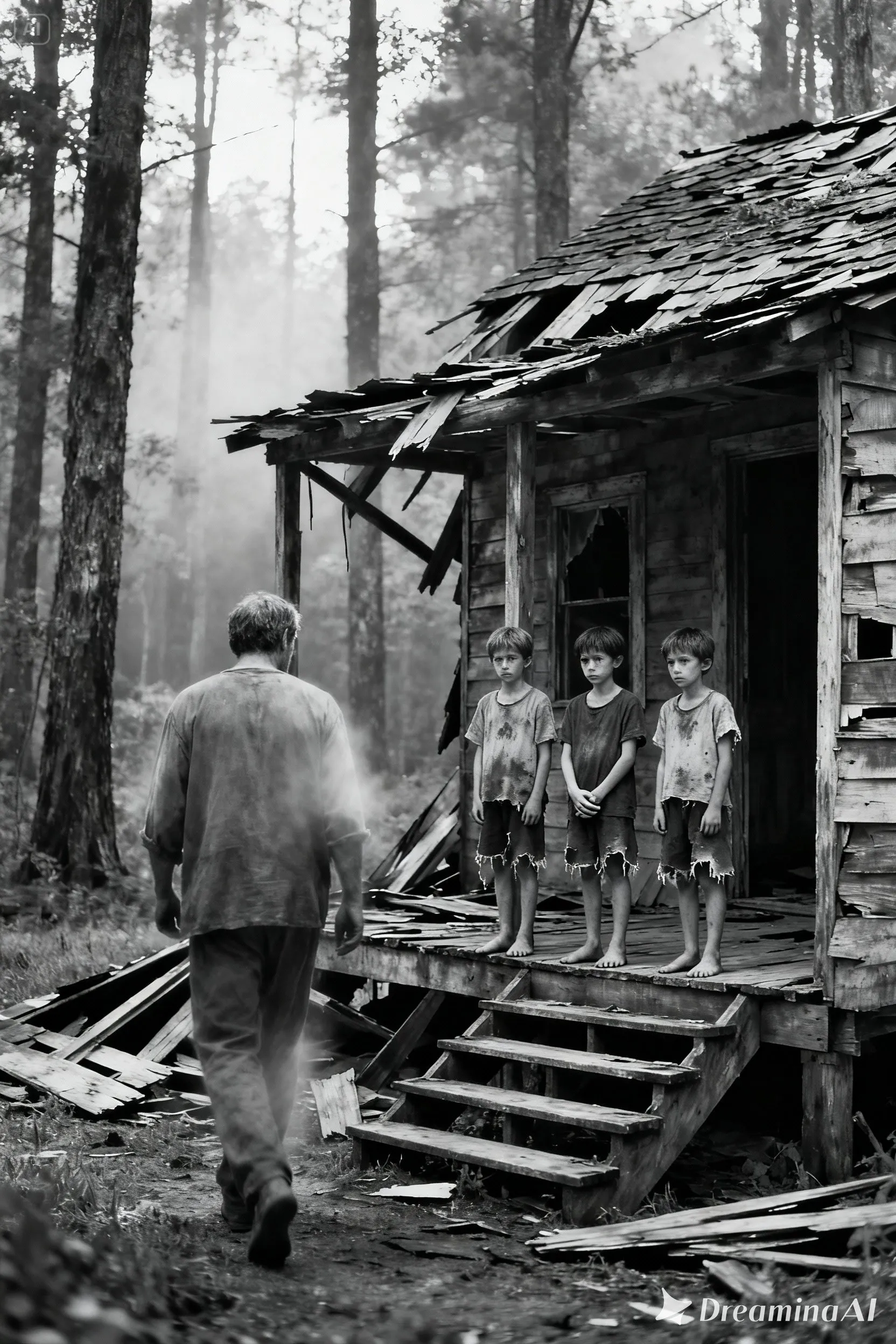
The children became euphoric upon seeing the movement in the house.
Workers coming and going, materials arriving, the sound of tools. “Dad? Is it going to look like a rich person’s house?” Andrés asked, his eyes wide.
No, my son, it won’t be like a rich man’s house, but it will be a nice house for us to live in. Even Alejandro was excited.
He picked up a broom and began helping to clean up the debris left behind from the construction.
“Dad,” he said as they worked together. “I’m sorry for being rude to you when you arrived.”
Miguel stopped what he was doing and looked at his son. “You don’t have to apologize, son. You had every right to be angry.”
No, I didn’t have it. I knew you weren’t to blame for being imprisoned.
Mom told us he was falsely accused, but I was so angry about everything that happened that I ended up taking it out on you. And why didn’t you believe me when I said I was innocent?
Alejandro lowered his gaze.
Because it was easier to be angry at you than to accept that Mom had abandoned us.
If I believed you were innocent, I would have to accept that she left of her own free will, not because she couldn’t take care of us on her own.
Miguel felt his heart clench. His 15-year-old son had carried a very heavy emotional burden for his age. Alejandro, your mom.
She’s not a bad person, she just couldn’t handle the situation.
Dad, I know you’re trying to defend her, but she abandoned us. She left four young children alone. That’s what a mother does. Miguel didn’t know what to say.
He was also hurt by Patricia, but he didn’t want the children to hold a grudge against their mother.
Son, sometimes people do bad things when they are desperate.
Maybe she thought she couldn’t take care of you alone and that it would be better if you were with relatives or something. But we don’t have any relatives, Dad.
Everyone knows it. It was true. Miguel and Patricia were practically orphans, with no extended family to help.
Then she was wrong, son. Very wrong.
But that doesn’t change the fact that she’s his mother and that he had good times with you. Alejandro was silent for a few minutes. Dad, can I ask you a question?
Can you? Do you love her? The question took Miguel by surprise. He stopped working and thought for a long moment.
You know, son, I spent eight years in jail thinking about her, remembering the good times and planning our life when I got out, but when I saw that she abandoned them, what I felt died.
“And if she comes back, we’ll have to talk, but not to resume the marriage, but only to decide about you, the children,” Miguel said firmly.
“I don’t want her to come back,” Alejandro said, and he said it with a conviction that seemed to hold up the whole house.
“Why?” asked Miguel, although he already understood the answer behind that refusal.
Because now we’re doing well, you’re here, the house is tidy, there’s no shortage of food, and if she comes back she’s going to mess everything up again.
Miguel understood the fear, because Alejandro had been the protector of his brothers and he feared that his mother’s return would destroy that newly built stability.
“Son, if she comes back, we’ll all talk together and decide what’s best, but don’t worry about it now,” said Miguel, trying to calm him down.
“Okay, Dad,” Alejandro replied, although his body was still tense.
The next day, exactly one week before the social worker’s deadline, Miguel woke up early and made a progress assessment.
The electricity had been reconnected and now they had light in all the rooms; they even managed to plug in a small, used refrigerator.
The basic plumbing was working and there was already running water in the kitchen and bathroom; they also installed a simple electric shower.
The roof wasn’t perfect yet, but they patched the biggest holes and the rain finally stopped coming in.
They painted the living room and bedrooms with cheap paint, but enough to make everything look cleaner, brighter, and more dignified.
They bought new mattresses and now each child had their own bed, and that simple truth changed the way people breathed in the house.
It wasn’t a luxurious house, but it was a decent house, and for the first time in years it felt like a home.
“Dad,” Daniela said at breakfast, “can we invite some friends from school over to see the new house?”
“Of course, daughter, you can invite whoever you want,” Miguel replied, as if that phrase were a celebration in itself.
“Really?” Daniela asked, smiling, because she had been embarrassed to bring someone along for a long time.
“And now you’re not ashamed anymore?” asked Miguel, watching as his daughter recovered something that poverty had stolen from her.
“No, Dad, now I feel proud of our house,” Daniela replied enthusiastically.
Words like that were worth more than all the money in the world to Miguel.
Dear listener, if you’re enjoying the story, please leave a like and subscribe to the channel, because that helps a lot.
Continuing, that afternoon Dr. Ricardo appeared to see how the renovations were going and was impressed upon entering.
Wow, it turned out really well, he said, in one week you completely transformed this place.
“Thank you, doctor,” replied Miguel, “the children helped a lot and put their heart into everything.”
“And how are they reacting to the changes?” Ricardo asked, looking around with professional attention.
Much better, replied Miguel, even Alejandro, who was the most resistant, now helps out.
“That’s great, and how are you feeling?” asked the doctor, measuring something more than just the artwork.
Miguel thought for a moment and said that for the first time since he got out of jail he felt that they could rebuild their lives.
“I’m sure they’ll succeed,” Ricardo replied, and then added that he had a proposal.
“What proposal?” asked Miguel, his heart racing without permission.
A friend of mine owns a small construction company and, after I told him about you, he became interested in hiring you, the doctor explained.
“Hire me how?” asked Miguel, as if he feared it was too good to be true.
“As a permanent employee, with a contract, monthly salary and benefits,” Ricardo said, directly and without embellishment.
“What do you think?” he asked, and Miguel felt his throat close up.
“Doctor, I don’t know what to say,” replied Miguel, “it would be a dream.”
“Then let’s talk to him tomorrow,” Ricardo said, “and if you come to an agreement, he can start next week.”
That night Miguel could hardly sleep because of anxiety, because a stable job was more than he had dared to imagine.
The next morning he got himself together as best he could and went with Dr. Ricardo to the construction company.
The owner, Don Luis, was friendly and straightforward, and said that Ricardo had told him a lot about Miguel.
He said you work well and are reliable, added Don Luis, observing him as one observes someone who comes from afar.
“I try my best, Don Luis,” Miguel replied humbly.
That’s what I want to hear, said Don Luis, and he was frank: he didn’t care about prison, he cared about work and honesty.
From what I saw of Ricardo’s office work, you certainly know how to work, Don Luis concluded.
“Thank you for the opportunity, sir,” said Miguel, feeling that life was opening a crack for him.
“You’ll have to earn the opportunity,” replied Don Luis, and explained the trial period.
“I’ll hire you for three months based on your experience, with a salary of 15,500 pesos plus benefits, and if it works out, we’ll renew it indefinitely,” said Don Luis.
“Do you accept?” he asked, and Miguel said yes without hesitation, because that number sounded like salvation.
“When can I start?” asked Miguel, still incredulous.
“Next Monday, at seven in the morning,” replied Don Luis, closing the deal naturally.
Miguel left the construction company walking on air, because he finally had a guaranteed salary and a clear path forward.
When he got home and told the children, they became euphoric, as if the news lit up the air.
“Dad, does that mean we won’t go hungry anymore?” Carlos asked with pure hope.
“That’s right, son, now Dad has a stable job and we’re going to live well,” Miguel replied.
“And the social worker isn’t going to threaten to take us away anymore?” asked Andrés, still feeling scared.
“No, son, she’s going to see the house, the food, and that Dad can support them,” Miguel replied.
Alejandro approached with tears in his eyes and apologized for having doubted, saying that now he saw that his father had come to stay.
You don’t have to apologize, son. You had the right to distrust me, but now you can rest assured: I will never abandon you again.
On Saturday, two days before the visit, Miguel made one last improvement: he painted the exterior, fixed the door, and planted flowers.
“Dad, the house is beautiful,” said Daniela, admiring the result as if she were looking at a new life.
Yes, it is, Miguel replied, and the important thing is that now they can live with dignity.
On Sunday they received an unexpected visit: Doña Beatriz, the retired teacher, arrived with a hot corn cake.
“Miguel!” she exclaimed upon seeing the transformation, “What an incredible change, this is unrecognizable.”
“Come in, please,” said Miguel, and Doña Beatriz looked around as if she were entering another world.
“In three weeks they managed to work miracles,” she said, her voice filled with emotion.
“It wasn’t a miracle, it was hard work and good people who gave me a chance,” Miguel replied.
Including you, Alejandro added, because without your first job none of this would have happened.
Beatriz smiled excitedly and said that sometimes you just need someone to believe in you.
“And how are you, children?” asked Doña Beatriz, looking at them with the tenderness of someone who has seen many stories.
“We’re doing well,” Carlos said enthusiastically, “now we have electricity, hot water, a new bed, and Dad got a permanent job.”
“How wonderful, you deserve that happiness,” Beatriz said, as if she were blessing the table.
“Doña Beatriz, would you like to stay for dinner?” Daniela asked. “We’re going to make spaghetti with meatballs.”
“I would love to, dear,” Beatriz replied, and sat down as if she were a natural part of the house.
During dinner, Beatriz told stories from when she was a teacher and the children spoke of their dreams with a newfound freedom.
Carlos wanted to be a mechanic like his father, Andrés dreamed of being a firefighter, Daniela of being a nurse, and Alejandro talked about engineering.
“You all have beautiful dreams,” Beatriz said, “and with support and study I am sure you will achieve them.”
“Do you think we can?” Daniela asked, needing to hear it from someone who sounded certain.
“I’m sure they’ve already proven they can overcome any difficulty,” Beatriz said, and that phrase was like a warm embrace.
On Monday morning Miguel woke up early, got dressed in his cleanest clothes and went to his first day at the construction company.
Don Luis introduced him to the employees and explained that Miguel would be responsible for electrical and plumbing repairs in homes.
“Miguel, you’re going to work with Roberto,” said Don Luis, pointing to a man of about fifty years old.
Roberto was friendly and experienced, and soon became a mentor, talking with Miguel during the first break.
“So you’re the guy who was unjustly imprisoned,” Roberto asked, and Miguel replied that yes, it was a terrible situation.
Eight years away from your family for something you didn’t do, Roberto said, adding that he heard Miguel was doing an impressive job.
Don Luis commented that you transformed your house in three weeks, said Roberto, as if he still didn’t believe it.
“I had to do it,” Miguel replied, “the social worker was going to take my children away if I didn’t improve the conditions.”
“And did you improve them?” Roberto asked.
“I improved them,” Miguel replied, “and this afternoon she’ll make the final visit, but I’m sure it will go well.”
At the end of the first day, Miguel was exhausted but happy, because the work was hard, yes, but organized and dignified.
When he arrived home, the children were waiting for him eagerly and Alejandro asked how his first day went.
“Very good, son, the people are cool and the work is honest,” Miguel replied.
“Dad,” Daniela said nervously, “the social worker called and she’s coming at three in the afternoon.”
Miguel looked at the clock, it was half past two, and said they were ready to receive her.
At three o’clock sharp, Dr. Gabriela arrived, got out of the car, and her expression changed when she saw the transformed house.
“Good afternoon, Dr. Gabriela,” Miguel greeted her, and she replied in surprise: “Wow, what a transformation.”
“Please come in, the children are waiting for you,” said Miguel, and the social worker entered, looking at everything carefully.
The house was clean, organized and well-lit, and the children were dressed in clean clothes and had their hair done, clearly well cared for.
“How did he manage to change so much in such a short time?” she asked, genuinely surprised.
“Hard work and people who gave me an opportunity,” Miguel replied, stating the truth without drama.
“Can I see the rooms?” she asked, and Miguel said yes, inviting her to look around.
The doctor inspected the bathroom with running water and a shower, the room with single beds, and the kitchen with a working refrigerator and stove.
Mr. Ramirez, I must admit I am impressed; this change exceeds all expectations, she said sincerely.
“Thank you, doctor,” replied Miguel, his chest tight with the possibility of losing everything.
“And did you manage to get a job?” she asked, searching for the last piece of the puzzle.
Yes, contract signed, fixed salary of 15,500 pesos, replied Miguel, as if handing over a key.
Excellent, said the doctor, and how are the children adapting to all this?
“Why don’t you ask them?” replied Miguel, taking a step back to let them speak for themselves.
Dr. Gabriela spoke individually with each child, and they all showed happiness, confidence, and a newfound calm.
Alejandro said to the older man, “Two weeks ago you were resentful towards your father, and today I see you differently, what changed?”
“What changed?” the doctor asked, and Alejandro replied that he saw that his father had come to stay and take care of them, working day and night.
A father who does that for his family deserves respect, Alejandro added, and that’s why he was no longer afraid of being separated from his brothers.
Daniela said that for the first time in a long time she felt safe, and she repeated that word as if she still found it hard to believe.
Confident that there would be no shortage of food, that the house wouldn’t fall down, that someone would take care of them if they got sick, confident that they were family.
Carlos and Andrés replied in unison that they were happy, because now they could play without worrying about dinner.
“And I can sleep without fear of the rain wetting my bed,” said Andrés, as if that phrase summed up years of anguish.
Dr. Gabriela finished her notes and told Miguel that she rarely saw such a radical transformation in such a short time.
They not only met the minimum requirements, but completely exceeded them, he added, before confirming a crucial piece of news.
That is why I am officially withdrawing the threat to remove the children, because they are in a healthy and safe environment with a capable caregiver.
Miguel felt his legs go weak with relief and the children shouted with joy, hugging each other as if they could breathe again.
Even so, the social worker said she would make monthly visits for follow-up and support, not for oversight.
“You’ll be very welcome whenever you want to come, Doctor,” Miguel replied with sincere gratitude.
After he left, the family had a small party with soft drinks and snacks to celebrate together.
Dad, said Alejandro, when you arrived three weeks ago I thought everything was going to get worse, but you turned everything around.
“We transformed everything, son,” replied Miguel, “because I couldn’t have done it alone.”
You took care of your siblings for two years, Daniela kept the house running, and the twins never lost hope.
“You gave me the strength to fight,” said Miguel, “and if you hadn’t held out until my return, nothing would have made sense.”
“We always knew you were coming back,” Daniela said excitedly, “even when Mom said no.”
“How did they know?” asked Miguel, trying to hold back his tears.
“Because you promised,” Carlos said simply, and that promise remained in our hearts.
Miguel felt his eyes burn and he hugged them all, promising to keep his promise until the end of his life.
That night, for the first time in eight years, he slept peacefully, with a decent home, food, and a possible future.
But life still held surprises, and the next morning, as Miguel was getting ready for work, there was a knock at the door.
Upon opening the door, he saw a thin, tired woman with deep dark circles under her eyes and worn-out clothes, and he knew immediately that it was Patricia.
“Hello, Miguel,” she said in a weak voice, and Miguel froze, because he hadn’t seen her for eight years.
Patricia was older, thinner, with a deep sadness in her eyes, as if life had consumed her.
“What are you doing here?” asked Miguel, trying to understand the reason for his sudden appearance.
“I heard you got out of jail and came to see the children,” Patricia replied cautiously.
“Come see the children,” Miguel repeated, raising his voice. “You abandoned them two years ago and now you want to see them.”
“Miguel, please let me explain,” she said, but Miguel cut her off with a burning question.
“Explain what? How could you abandon four young children?” she said angrily and in pain.
At that moment the children appeared, and upon seeing her, each one reacted in a completely different way.
Carlos and Andrés ran to hug her shouting “Mom!”, while Daniela stayed still and Alejandro turned his back.
“My babies,” Patricia said, crying as she hugged the twins, “how they’ve grown, as if time didn’t exist.”
“Mom, why did you leave?” Carlos asked innocently, and Patricia looked at Miguel, not knowing what to say.
“Come in,” Miguel said reluctantly, “because the children deserve a conversation with you, even if it pains me.”
Patricia entered and was impressed with the decorated house, murmuring that everything was very different.
Dad fixed everything, said Andrés proudly, now we have electricity, hot water and even a refrigerator.
“That’s great,” Patricia said, but her voice carried a sadness she couldn’t hide.
“Daniela, come and say hello to your mom,” Miguel asked, and the girl approached slowly with visible coldness.
“Hi, Mom,” said Daniela, and Patricia tried to smile, saying that she looked beautiful and was now a young lady.
Yes, I grew quite a bit in two years, Daniela replied sharply, making it clear that the pain was still there.
“Where is Alejandro?” Patricia asked, and Daniela replied that he didn’t want to see her.
“Because you abandoned us when we needed you most,” Daniela said, and Miguel intervened, asking her to call his brother.
“Does she deserve it?” Daniela burst out. “If anyone deserves anything, it’s us, we deserve an explanation.”
“No, Miguel,” Patricia said gently, “she’s right, you deserve an explanation and I owe you one.”
Patricia sat down, took a deep breath, and said that when she arrested him, she thought she could handle it alone, but everything became more difficult.
“Difficult how?” Daniela asked, crossing her arms, prepared to hear what she had feared.
He had no money, the house deteriorated, the children were getting sick and he couldn’t afford a doctor, and the neighbors were talking badly about him.
“And then you started drinking?” Alejandro asked, appearing in the doorway with a voice full of resentment.
Patricia lowered her head and admitted that she drank to forget, but the more she drank, the worse everything got.
“And the men you brought home?” Alejandro said sadly, and Patricia confessed that she was alone and desperate.
“Those men promised to help me,” she said, but Daniela replied that they only wanted to take advantage of her.
Patricia admitted that she was naive and believed that someone would marry her and solve the problems.
“And why did you leave?” Carlos asked, not fully understanding the adults’ conversation.
“Because I got sick, my son,” Patricia said, crying, “I got sick from drinking and then from drugs.”
Miguel was startled when he heard “drugs,” and Patricia explained that he started drinking and then someone offered him something else.
“When I realized it, I was already addicted,” she said, and the silence grew heavy because everyone understood the seriousness of the situation.
“I left because I was hurting them and I couldn’t take care of them anymore,” Patricia said, admitting that she used to yell at them while under the influence of drugs.
Sometimes he didn’t even remember to feed them, he confessed, and Alejandro angrily asked if he thought leaving would solve the problem.
“I thought they’d be better off without me,” Patricia said, “that the neighbors would help,” but Alejandro burst out saying that nobody helped.
“I stopped studying to work and Daniela took care of the children, we went hungry, Mom,” Alejandro said, his voice breaking.
Patricia cried uncontrollably and said that the drug had taken over her mind and she could no longer think clearly.
“Where were you these past two years?” Daniela asked, and Patricia said that she was in the capital, often on the street.
She said she tried to quit drugs, relapsed, and tried again, until finally she had been clean for six months.
“I live in a boarding house and work in a laundromat,” he added, looking at Miguel as if searching for some faith.
“And why did you come back now?” asked Alejandro suspiciously, unable to believe in a new intention.
Because I knew your dad had left and that you were okay, I thought maybe we could try again.
“To be a family again?” Alejandro repeated bitterly, as if those words were a mockery.
Alejandro wanted to tell him everything they had experienced, and Miguel tried to stop him, but he said it was necessary.
“Do you know how many times we went to bed hungry?” said Alejandro. “How many times did I lie at school saying we were fine?”
“Do you know how many times Daniela cried herself to sleep because she missed you?” she insisted, while Patricia covered her face.
Do you know how many times Andrés woke up asking for you? How many times Carlos got sick and there was no medicine?
And what hurts the most, Alejandro said, is that Dad did in three weeks what you couldn’t do in six years.
“Alejandro, that’s enough,” Miguel said firmly, “because she already knows the truth and is suffering enough.”
Miguel knelt in front of Patricia and told her that what she did was serious and that forgiveness would take a long time.
But you’re their mother, she added, and if you’ve really changed, we can try to talk, although it will depend on the children.
“Do you forgive me?” Patricia asked, and Miguel replied that it wasn’t up to him, but to them.
“If they don’t forgive you, you’ll have to live with the consequences,” Miguel said, making the boundary clear.
Patricia asked to at least try, to try to win back his love and be his mother again, even if it was difficult.
Carlos asked if his mother would live with them, and the awkward silence made it clear that this wish was not possible.
“Your mom isn’t going to live here,” Miguel said gently, “because it’s complicated and we need stability.”
Patricia looked at Miguel hopefully and suggested trying for the sake of the children, but Alejandro exploded.
“Where was that good when we needed it most?” Alejandro shouted, before running out and slamming the door.
Daniela said that Alejandro was right, and asked if a second chance wasn’t just opening the door to another abandonment.
Patricia insisted that she had changed, that she had been clean for six months and had a job, but Daniela said they didn’t need money.
Patricia spoke of motherly love, but Daniela laughed bitterly, asking where that love was when she was crying.
Carlos asked why they were angry, and Miguel explained that some wounds are deep and an apology is not enough.
Patricia decided to leave so as not to cause any more harm, while Carlos and Andrés clung to her crying.
“I love you,” Patricia told the twins, “and when you grow up and understand, I hope you can forgive me.”
Daniela replied that she had already taken care of her siblings for two years, and Patricia admitted that she did it better than she did.
Miguel tried to stop her, but Patricia said that now they needed stability and she only brought instability.
Before leaving, Patricia thanked Miguel for taking care of them and apologized for doubting his innocence.
Miguel pointed to the children and said he had to apologize to them, because nothing erases two years of neglect.
Patricia left, leaving Carlos and Andrés crying, and Miguel explained that sometimes letting go is also love.
That night the house was like a wake, with twins crying, Daniela silent, and Alejandro not returning.
Miguel told Daniela that forgiveness cannot be forced, and that forgiving is about freeing the wounded, not rewarding the guilty.
The next morning, Alejandro returned with red eyes and said that he slept at Doña Beatriz’s house.
Miguel reprimanded him for leaving without warning, and Alejandro confessed that he needed to think and came to a conclusion.
“I hate my mom,” Alejandro said, causing an impact that left everyone speechless.
Miguel asked him not to speak like that, but Alejandro said that hating was better than feigning an impossible forgiveness.
Miguel accepted that he had a right to anger, but asked not to let that anger consume him and steal his happiness.
Alejandro asked if Miguel still loved Patricia, and Miguel replied that that love died when he learned that she had abandoned them.
“I could forgive her maybe,” said Miguel, “but romantic love doesn’t come back because love needs trust.”
At work, Roberto noticed Miguel was dejected, and Miguel told him that Patricia had appeared and everything had become complicated.
Roberto suggested proceeding gradually, with visits without cohabitation, and talking to the children about forgiveness and boundaries.
That afternoon, Miguel arrived home and found Patricia on the terrace talking with Carlos and Andrés.
Miguel asked what was wrong, and Patricia said she couldn’t leave without trying again.
Alejandro appeared and asked to speak privately, and said that perhaps they should give him a chance for the sake of the children.
With conditions, Alejandro added, because it wasn’t fair to deny the twins contact because of their own courage.
The conditions were clear: she would not live there, and if she showed up drugged, drunk, or absent without notice, it was all over.
Daniela also agreed, and Miguel accepted because it was what the children wanted to try.
They returned to the terrace and Miguel announced that there would be a second chance, but with strict limits and supervision.
Patricia accepted everything with tears in her eyes, and Alejandro said that she should thank the twins, because thanks to them that option existed.
Patricia knelt before Carlos and Andrés and promised not to disappoint them, accepting that if she broke the promise they would never see her again.
The first Sunday he arrived on time, brought sweets and spent the afternoon with the children, while Alejandro and Daniela kept their distance.
In the following weeks he always complied, and little by little the older ones began to participate in the conversations.
One day Daniela confessed that she cried every night for months after her mother left, and Patricia apologized.
Daniela said she still felt anger, but she missed the mom who made corn cake and combed her hair for school.
Patricia wanted to do it, Daniela remembered the recipe and they cooked together, creating a bridge that previously seemed impossible.
Patricia explained that she went to support groups on Tuesdays and Thursdays, and that this gave her the strength to stay clean.
When the cake came out of the oven, the whole family shared it, and even Alejandro admitted that it tasted the same as before.
Later, Patricia asked to speak with Miguel privately and asked him to have Carlos spend a weekend with her.
Miguel feared a relapse, but decided to talk to his children and set clear conditions to protect Carlos.
Carlos was excited, Andrés felt no jealousy, and Miguel agreed with strict rules and surveillance.
The weekend went well, and little by little Patricia gained confidence, with weekends first for Carlos and then for Andrés.
But a year later, on a rainy Sunday, Patricia did not appear, and the hours passed until it became clear.
Alejandro burst out saying he knew it would happen, and Miguel, worried, went to the boarding house on Monday to investigate.
The owner told her that Patricia had a relapse on Friday, arrived drugged and spent the weekend delirious.
Miguel went upstairs, saw her pale and ill, and Patricia admitted to the relapse and that she had taken drugs due to stress.
Miguel told her that meant losing her children again and breaking the trust, even though she insisted it only happened once.
“I can’t believe you’re putting my children at risk,” Miguel said, demanding serious treatment if she wanted to speak again.
Miguel returned home and explained to the children that their mother had relapsed, and the silence was deafening.
“That’s why he didn’t come yesterday,” Andrés asked in a small voice, and Miguel confirmed, unable to soften the reality.
Carlos cried, Daniela asked if he would visit them again, and Miguel said only if he was admitted and treated.
“And if he can’t,” Alexander asked, “then he won’t be able to visit us anymore,” and his anger flared up again.
“I knew this was going to happen, that’s why I didn’t want them to get attached to her again,” Alejandro said with barely contained anger as he looked at his brothers.
“Alejandro, calm down,” Miguel replied in a firm voice, trying to control the situation before it got out of hand.
“I’m not going to calm down, look at Carlos crying, look at Andrés sad, she made them suffer again,” Alejandro shouted.
Alejandro was not wrong; the younger children had grown fond of their mother again and now suffered deeply because of her relapse.
“Dad,” Carlos said between sobs, “Mom doesn’t love us,” a phrase that broke Miguel’s heart.
“Does she love us, son?” Miguel asked carefully, knowing that any answer could hurt.
“He loves them in his own way,” Miguel replied, choosing words that neither denied love nor reality.
“So why did he do this?” Carlos asked sadly.
“Because she’s sick, my son,” Miguel explained, “addiction is a disease, and sometimes sick people hurt those they love.”
“And can it heal?” Andrés asked hopefully.
“You can heal if you really want to and work hard to achieve it,” Miguel replied honestly.
“And if Sana is able to visit us again?” Carlos asked, his voice trembling.
Miguel hesitated before answering, torn between protecting them and keeping hope alive.
“If it truly heals, then yes,” Miguel finally replied.
During the following months there was no news of Patricia, only rumors that she was in a rehabilitation clinic.
The children, especially Carlos and Andrés, felt the absence a lot, but little by little they resumed the family routine.
Ironically, Alejandro was the one who worried about her the most after the relapse.
“Dad, do you have any news about Mom?” Alejandro asked one day with concern.
“No, son,” replied Miguel.
“Why?” Alejandro insisted.
“Because despite everything, she’s still my mother and I don’t want her to die,” Alejandro said sincerely.
“He’s not going to die,” Miguel replied, “he’s stronger than he thinks and he has you to fight for.”
Six months after the relapse, Patricia reappeared at the house, visibly thinner but with a clear and determined look.
“Hello, Miguel,” she said cautiously.
“Hello, Patricia,” he replied, observing her attentively.
Better, much better, she replied when Miguel asked her how she was.
“I received treatment, I was hospitalized in a clinic for four months and now I live in a support home,” Patricia explained.
“I participate in support groups and work with social assistance,” she added firmly.
“And what do you want here?” Miguel asked cautiously.
“I want to see my children for just a few minutes so they can see that I’m okay,” Patricia replied.
Miguel hesitated, aware of everything that was at stake.
“I understand you can no longer trust me,” Patricia said. “I’m not asking for trust, just a chance to show you I’m fighting.”
“Five minutes on the terrace, I’ll be there the whole time,” Miguel finally decided.
Miguel called the children, who were surprised to see their mother.
“Mom!” shouted Carlos and Andrés, running to hug her.
“My babies,” Patricia said through tears, “how they’ve grown.”
“Are you okay, Mom?” Carlos asked.
“Yes, my love, I’m really fine now,” she replied.
“And you’re not going to use drugs?” Andrés asked.
“No, son, never again,” Patricia replied.
“Do you promise?” Carlos insisted.
I promise, but this time with help, Patricia explained, I’m not fighting alone.
Alejandro and Daniela approached cautiously.
“How can we be sure she won’t relapse again?” Daniela asked.
“They can’t be sure,” Patricia replied honestly, “not even I am.”
“Addiction will always be with me, and I have to fight it every day,” he explained.
“What if he relapses again?” Alejandro asked.
“Then you have the right not to want to see me anymore, and I will accept that,” Patricia replied.
“Can you come visit us again?” Andrés asked hopefully.
Patricia looked at Miguel, who gently shook his head.
Not yet, Patricia explained, Dad needs to be sure Mom is okay.
“And how will he be sure?” Carlos asked.
“In time, son, in plenty of time,” replied Miguel.
The five minutes passed quickly and Patricia said goodbye.
“I love you all very much and I will continue fighting even if you decide not to see me anymore,” she said before leaving.
“We want to see you, Mom,” Carlos said.
“I know, but sometimes wanting isn’t enough,” Patricia replied sadly.
Later, Daniela commented that her mother seemed different, more honest and real.
Miguel admitted that he had noticed it too, but he still needed time to decide.
Dad, said Alejandro, I think we should give him another chance, but very slowly.
“One visit a month,” he proposed, “and if it turns out to be a year old, then we’ll see.”
Miguel was surprised, knowing that Alejandro had been the most injured.
“I’m not doing it for her, but for myself,” Alejandro explained, “I want to release my anger.”
The other children also agreed to try it.
So they decided to start with a monthly visit, always under Miguel’s supervision.
Patricia accepted without conditions when Miguel told her the decision.
Month after month she kept her word, arriving sober, affectionate, and respectful of boundaries.
After a year, the visits became bi-weekly and then weekly.

But there would never be weekends or time spent with his mother again.
Patricia understood that her place had changed; she would always be a mother, but Miguel was the one who took care of things.
Three years after the relapse, during a Sunday visit, Patricia made an unexpected announcement.
“Kids, I have some news for you,” she said with a nervous smile.
“What news, Mom?” Daniela asked.
“I’m getting married,” Patricia announced, surprising everyone.
The silence on the terrace was total, until Alejandro spoke with surprise and some tension when he asked who his mother was planning to marry.
“With a man I met in the support group,” Patricia replied, explaining that he was also a former addict, had children, and they had been together for two years.
“Two years?” Miguel asked, surprised. “Why didn’t you ever talk about him with us before?”
“Because I wanted to be sure the relationship would work before involving you,” Patricia answered honestly.
“And are you sure now?” Carlos asked cautiously, trying to better understand his mother’s decision.
“I am,” Patricia affirmed, “he is a good person, he works, he doesn’t use drugs, and he helps me to be better every day.”
“Does he know about us?” Carlos asked with some concern.
“She knows, my love,” Patricia replied, “and she wants to meet you when you’re ready.”
“Are we going to have to call him stepfather?” Andrés asked, clearly nervous.
“No, son,” Patricia replied gently, “you already have a very good father, Hector will only be my husband.”
“Hector?” Daniela asked, “Is that his name?”
Yes, Hector Vargas, Patricia explained, is a carpenter, he is forty-five years old and has two daughters who live with his ex-wife.
“Mom,” Alejandro said seriously, “are you sure you want to get married again?”
“I am, son,” she replied, “this time it’s not out of need or desperation, it’s out of true love.”
“What if it doesn’t work?” Andrés asked worriedly.
“If it doesn’t work out, we’ll separate,” Patricia replied, “but that won’t affect you because you won’t be living with us.”
“Where are they going to live?” Carlos asked.
“In a small house that we are renting, near the support house where I live now,” Patricia explained.
“And the visits?” Carlos asked worriedly, “will they continue as before?”
“They’ll continue the same, my love,” Patricia replied, “once a week, every Sunday.”
Daniela looked at Miguel and asked him directly what he thought about all of that.
“I think if your mother found someone who makes her happy and keeps her away from drugs, that’s a good thing,” Miguel replied.
“And you don’t think about getting married again?” Patricia asked curiously.
“Maybe someday I’ll find someone special,” Miguel replied calmly.
“I hope you find it,” Patricia said, “you deserve to be happy, Miguel.”
The following month, Patricia took Hector to meet the children, and from the beginning he showed respect and good intentions.
Miguel, Hector told him, I want you to know that I have no intention of being the father of your children.
They already have an excellent father, he added firmly and respectfully.
“Thank you for making that clear,” Miguel replied, appreciating her honesty.
“I want to help Patricia stay clean and be a good mother,” Hector said with conviction.
“I hope so,” replied Miguel, “and you can count on me if any problems arise.”
Patricia and Hector’s wedding was small, held at the support center where they met, with few guests.
Only Carlos and Andrés attended, while Alejandro and Daniela decided not to go because it was still too recent for them.
Over time, the visits continued and Patricia gained stability thanks to Hector’s constant support.
For two years after the wedding, Patricia had no relapses and gradually regained her children’s trust.
Alejandro, now nineteen years old, confessed one day to Miguel that he had finally managed to forgive his mother.
“I haven’t forgotten what happened,” he said, “but I no longer feel anger, and that makes me feel lighter.”
Miguel explained to her that forgiving doesn’t always mean becoming friends again, because friendship needs trust and time.
A year later, something unexpected happened when Miguel met Beatriz Morales at a school meeting.
She was a teacher, divorced, a mother of two, intelligent, and had a smile that lit up any room.
Little by little, Miguel began to look forward to those chance encounters at school.
“Dad,” Daniela said one day, “you’re different, happier, you sing more and smile more.”
“Maybe I met someone special,” Miguel admitted cautiously.
“A woman?” Carlos asked curiously, joining the conversation.
“It could be,” Miguel replied, smiling. “He’s an honest, hardworking, and very nice person.”
“What’s his name?” Carlos asked immediately.
Beatriz Morales, replied Miguel.
“And when are we going to meet her?” Andrés asked excitedly, ending the moment with enthusiasm.
“Relax, boys, it’s still too soon for that,” said Miguel, “we’re just getting to know each other.” Although the boys were curious about Beatriz and began asking about her frequently.
Three months after their first meeting, Miguel finally asked Beatriz to officially be his girlfriend. She accepted with a smile, and they began spending more and more time together.
Miguel, Beatriz said calmly one day, I think the time has come for me to officially meet your children and for them to meet mine as well.
“Are you sure?” Miguel asked with some concern, aware of how delicate this step could be for everyone.
“I am,” Beatriz replied, “and if we want this relationship to work, they need to accept each other, even if we don’t know how they will react.”
The following Sunday, Beatriz went to have lunch at Miguel’s house with her two children, Fernando, sixteen, and Valeria, fourteen.
At first the children were shy, but Beatriz had a special gift with them and soon they were all chatting animatedly around the table.
Beatriz, Daniela asked during lunch, how did you meet my dad?, with genuine curiosity.
“At Andrés’ school,” Beatriz replied, “we started talking about you and discovered that we had many important things in common.”
“Like what?” asked Alejandro, interested in learning more about that connection.
“We both raised our children practically on our own, we value family, honest work and education,” Beatriz explained matter-of-factly.
“Did you know that my dad was in jail?” Alejandro asked directly, without beating around the bush.
“I knew it,” Beatriz replied calmly, “and I also knew that he was innocent.”
“And that didn’t bother you?” Daniela asked, surprised by the answer.
“Why would it bother me?” Beatriz said firmly. “He didn’t do anything wrong, and I judge people by their character.”
Miguel felt his heart warm, confirming that Beatriz really was a special person.
Beatriz, said Carlos, are you going to be our stepmother?, provoking an immediate reaction.
Carlos, Miguel reprimanded, it’s not right to ask that, but Beatriz laughed softly.
“That’s a fair question, Carlos,” Beatriz said. “I don’t know if I’ll be his stepmother, only time will tell.”
But I can promise you one thing, he continued, if I become part of your family, I will love and respect you all.
“Are we all going to have to live together?” Andrés asked, sounding a little nervous.
Not necessarily, Beatriz replied, there are many ways to be a family, even living in separate houses.
The children seemed to relax with that response and the atmosphere became calmer.
After lunch, while the children played in the yard, Beatriz and Miguel chatted on the terrace.
“How do you think it went?” Miguel asked expectantly.
“I think it went very well,” Beatriz replied, “your children are polite, affectionate, and intelligent.”
“And yours?” Miguel asked, “how did they react?”
They liked you too, Beatriz said, Fernando thinks you’re a very present dad and Valeria got along very well with Daniela.
Miguel smiled, relieved and grateful for how things were turning out.
In the following months, Beatriz became a constant presence in the house, always respecting the children’s space.
Daniela, in particular, grew deeply fond of Beatriz and found in her a stable female figure.
“Beatriz,” Daniela said one day, “can I tell you a secret?” in a timid voice.
“Of course, dear,” Beatriz replied sweetly.
“I always wanted a mom like you,” Daniela confessed honestly.
“A mother who is present, who advises and hugs when one is sad,” she explained with emotion.
Beatriz listened attentively and reminded her that her biological mother loved her, even though she had had difficulties.
A year later, Miguel and Beatriz decided to live together and bought a large house for all their children.
“Dad,” said Alejandro, now an adult, “are you going to marry Beatriz?” he asked seriously.
That’s what I intend, Miguel replied, why do you ask?
Because we believe it would be fair to have a ceremony where we, the children, also participate as a family.
Miguel was deeply moved by the proposal and accepted without hesitation.
The wedding was unlike any other, because in addition to the vows of the bride and groom, the children also made their own vows.
Beatriz, said Alejandro on behalf of everyone, we accept you as our mother of the heart.
And we accept Fernando and Valeria as our siblings, promising to take care of each other like a true family.
There wasn’t a single dry eye during that unconventional and deeply sincere ceremony.
The Sunday after the wedding, Patricia made her usual weekly visit and it was the first time she saw Miguel already married to someone else.
“Hello, Miguel, congratulations on your marriage,” Patricia said calmly, trying to hide the mix of emotions she felt seeing him so different.
“Thank you, Patricia,” Miguel replied respectfully, while Beatriz smiled naturally and calmly beside him.
Beatriz seems to be a wonderful person, Patricia commented sincerely, watching her interact with the children.
“He is,” Miguel replied, “he is a special person and very important to all of us.”
“And the children?” Patricia asked. “How did they react to the marriage and this new family beginning?”
“Very well,” replied Miguel, “they adore Beatriz and feel safe and happy with her.”
Patricia remained silent for a few moments, watching the children play with Beatriz in the yard, sharing carefree laughter.
“Miguel, can I tell you something?” Patricia asked cautiously, finally breaking the silence.
“Go ahead,” he replied, ready to listen to her attentively and without judgment.
I’m glad you found someone and I’m glad my children have a stable mother figure in their lives.
“Thank you for saying that,” Miguel replied sincerely, appreciating the maturity of her words.
“I know I could never be the mother they deserved,” Patricia continued, “but at least now they have someone who can be.”
Patricia, you will always be his biological mother, nobody can take that away from you, Miguel said firmly.
“I know,” she replied, “but Beatriz will be the everyday mother, the one who is there when they need her, and I’m at peace with that.”
“Honestly,” added Patricia, “my children deserve the best, and if Beatriz is the best thing for them as their mother, I support it.”
At that moment, Carlos ran towards them enthusiastically and said something that moved all the adults present.
“Mom Patricia, come and meet my mom Beatriz,” she said naturally with a broad smile.
The way Carlos referred to both women deeply touched the hearts of everyone present.
Beatriz approached and greeted Patricia cordially and respectfully, showing a sincere smile.
“It’s a pleasure to meet you in person, Patricia,” Beatriz said, “the children talk about you a lot.”
“I imagine not only good things,” Patricia replied with a sad but honest smile.
“They talk about a mother they love, who went through difficulties, but who never stopped trying to be better,” Beatriz replied.
“Thank you for taking care of them and thank you for allowing me to be a part of their lives,” Patricia said with restrained emotion.
That Sunday, for the first time in many years, all the important adults in the children’s lives were together and in harmony.
Miguel, Beatriz, Patricia and Hector formed a very unconventional family, but a family nonetheless.
Five years after Miguel and Beatriz’s wedding, the family had fully stabilized and was living in equilibrium.
Alejandro had graduated with an engineering degree and landed a good job, proud of his hard work.
Daniela was studying nursing, following her vocation of care and service.
Carlos and Andrés, already teenagers, were exemplary students and outstanding athletes at school.
Fernando, Beatriz’s son, had become a protective older brother to Miguel’s children.
Valeria, now nineteen, developed a very special relationship with Daniela, who had always wanted a sister.
Patricia continued her weekly visits, now accompanied by Hector, who became a respected father figure to the children.
He never tried to replace Miguel, but rather to offer a different and complementary male presence.
One day, Carlos, now sixteen years old, approached his father with an important question.
“Dad, can I ask you a question?” he said seriously.
“Sure, son,” Miguel replied, “what do you want to know?”
“Do you regret anything in life?” Carlos asked, taking Miguel by surprise.
“Why do you ask that?” replied Miguel, intrigued by the depth of the question.
Because at school we talked about regrets and I thought about everything we went through as a family.
You were unjustly imprisoned for eight years, Mom abandoned us and we went through many difficulties.
“Don’t you regret anything?” Carlos insisted.
Miguel thought carefully before answering, searching for the right words.
I regret not fighting faster to prove my innocence, and that you were left alone for so long.
“I also regret not noticing her mother’s problems sooner,” she said sadly.
But only that, because everything else, although it was hard, brought us to where we are today.
If all that hadn’t happened, perhaps I would never have discovered how strong and brave you are.
“So, do you think it was worth it?” Carlos asked.
“I will never believe that their suffering was worth it,” Miguel replied, “but I do believe that we transformed the pain into something positive.”
They learned to overcome difficulties, to value family, honest work, and the people who truly care about them.
They learned to forgive, even though it’s difficult, and those lessons will serve them for life.
“And did Mom Patricia learn anything?” Carlos asked.
Yes, he learned that addiction is an illness that must be treated every day.
She learned that loving sometimes means letting go in order to do what’s best for others.
And he learned that it’s never too late to try to be a better person.
“And what about Mama Beatriz?” Carlos asked again.
She learned that family is not just blood, but love, commitment, and constant presence.
That night, during the family dinner, Carlos shared the conversation with everyone.
The conclusion, Miguel said, is that we went through a lot, but we came out stronger.
“The family is the one that’s present,” Alejandro added.
Forgiving is not forgetting, it’s not letting the past destroy the future, Daniela said.
And even if everything seems impossible, there is always a way out, Beatriz concluded.
“I just want to say something,” said Andrés, the youngest, “I love this crazy family we are.”
Everyone laughed and agreed, because it was a crazy family, but it was their family.
Valeria, Beatriz’s daughter, announced her engagement during lunch and, with a nervous smile, asked for everyone’s attention because she had important news to share.
“What news?” Beatriz asked curiously, without imagining that this announcement would completely change the tone of the family gathering.
“I’m getting married,” Valeria said in a firm voice, and the table immediately erupted in shouts of joy, spontaneous applause, and heartfelt congratulations.
“With whom?” Daniela asked excitedly, leaning forward as if she needed to hear every detail without missing a thing.
“With Eduardo, that boy they met last year,” Valeria replied, prompting murmurs of recognition from everyone present.
“The doctor?” Miguel asked in surprise, raising his eyebrows as he tried to confirm that they were talking about the same person.
“The same,” Valeria replied, laughing, proud of the certainty with which she spoke about her future husband.
“And when will the wedding be?” Patricia asked with genuine enthusiasm, already imagining the event and the family gathering.
“In six months,” Valeria replied, “and I want all of you to be there with me on that very important day.”
“Is our whole family crazy?” Patricia asked, surprised, not sure she had correctly understood what Valeria meant.
“Everyone,” Valeria replied without hesitation, “because you are part of my family now and I can’t imagine my wedding without your presence.”
Patricia was visibly moved, because after everything she had been through, being considered family by her stepdaughter exceeded any expectation she had ever had.
Valeria, are you sure it won’t be strange?, Patricia asked cautiously, still afraid of making someone uncomfortable.
“Why would that be strange?” Valeria replied, “You are the children’s step-grandparents and Hector is like an uncle to all of us.”
“Step grandparents?” Hector asked, laughing, surprised but clearly moved by the idea that Valeria expressed so naturally.
Yes, Valeria explained, they are old enough to be grandparents and the little children already treat them that way, and when I have children they will also need grandparents.
The idea of being considered a grandfather left Hector visibly moved, as he had never had grandchildren and never imagined occupying that position.
“It would be an honor to be a step-grandfather to your children,” Hector said with a sincere voice and slightly moist eyes.
“And mine too?” Patricia asked timidly, not quite daring to assume that the place also belonged to her.
“Of course, a step-grandmother,” Valeria confirmed with a broad smile that dispelled any doubts Patricia might still have had.
That afternoon, after Patricia and Hector left, the family stayed behind chatting animatedly about the wedding and all that it meant.
“Dad,” Daniela said, “did you notice how excited Mom Patricia got when Valeria called her ‘step-grandmother’?”
Yes, I noticed, Miguel replied, and I think she never imagined that one day she would be accepted like this by our family.
Probably not, said Alejandro, and then asked if he could say something he had been thinking about for a while.
“Sure,” replied Miguel, encouraging him to express what he felt without reservation.
I think we did the right thing by giving him several opportunities, even though he disappointed us many times, because now we see the result.
Now we have a huge family, Alejandro continued, full of love and people who chose to stay and build together.
Dad, Mom Beatriz, Mom Patricia, Uncle Hector, brothers and all of us, he said, is a lot of love in one family.
“That’s true,” Beatriz agreed, “because when I met them I never imagined that our family would be so big and so close.”
“Mom Beatriz,” Carlos asked, “did you ever feel jealous of Mom Patricia?” surprising everyone with his frankness.
“At first, yes,” Beatriz answered honestly, “not out of competition, but out of insecurity about what my place would be in their lives.”
“And now?” asked Andrés with genuine curiosity, hoping to understand how they had overcome that feeling.
“Not now,” Beatriz replied, “because I understood that love is not divided, it multiplies when it is shared.”
“They can love Mom Patricia and love me without that diminishing their love for either of them,” she explained calmly.
“And was Mama Patricia jealous of you?” Andrés asked, turning now to Miguel.
Yes, he felt them, Miguel replied, but now he understands that the children need her as much as Beatriz.
She can’t give them what Beatriz gives them, and Beatriz can’t give them what she gives them, she added.
“What does Mama Patricia give us that Mama Beatriz doesn’t?” Carlos asked with genuine curiosity.
The biological connection, Daniela replied, the feeling of belonging from birth and the history of where we come from.
“And what does Mama Beatriz give us that Mama Patricia doesn’t?” Andrés asked without hesitation.
This ability, Alejandro replied, is the assurance that she will always be there when we need her and her lap is always available.
“So, do we need both of them?” Carlos asked, seeking confirmation.
“We need both of them,” they all replied in unison, sealing that shared truth.
Six months later, Valeria’s wedding was an unforgettable family event, with everyone present celebrating together.
During the ceremony, Valeria thanked each one, acknowledging the unique role they had played in her life.
“To my mom Beatriz,” he said, “for raising me with love and teaching me to be strong.”
To Miguel, he continued, for becoming a second father and showing me what a real man is.
To Patricia, for teaching me that it’s never too late to start over and be a better person.
To Hector, for demonstrating that kindness and strength can go together.
And to all my adopted brothers, he concluded, for teaching me that family is much more than blood.
During the party, Miguel and Patricia spoke alone for the first time in years, with a newfound calm between them.
“Thank you,” Patricia told him, “for not giving up on me when I had given up on myself.”
“I forgave you a long time ago,” Miguel replied, “because you were always his mother.”
“Do you think we could ever be friends?” she asked cautiously.
“I think we already are,” Miguel replied, “because we respect each other and work together for the good of our children.”
If that’s not friendship, I don’t know what is, he added, looking at the gathered family.
Later, they all danced together, celebrating not just a wedding, but the entire journey they had shared.
They had transformed suffering into something beautiful, building a family based on love, forgiveness, and daily choices.
And although it wasn’t easy, it was worth it, because they discovered how much they were capable of loving and rebuilding.
The end of the story.
Your participation is very important to us.