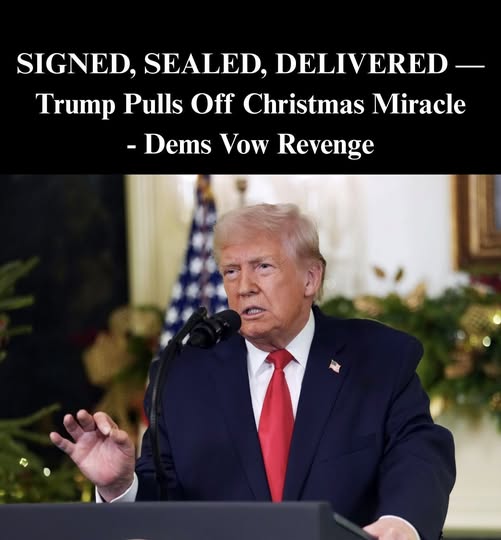
On Wednesday, the Senate sent a significant defense package to President Donald Trump, completing one of the last major legislative tasks for the year. Lawmakers came together to pass the National Defense Authorization Act (NDAA), a comprehensive $901 billion bill packed with defense policies that allocate funding for several of the Trump administration’s national defense priorities.
The measure received strong bipartisan support, passing the upper chamber with a vote of 77-20. This legislative exercise is an annual routine for Congress, typically wrapping up the year without much controversy.
This year, the National Defense Authorization Act (NDAA) encountered challenges in the House that put its passage at risk. While the Senate proceedings were less contentious, there were still unresolved issues regarding certain provisions that caused concern among lawmakers.
Bipartisan frustration arose over a provision that aimed to relax some safety standards in the airspace over Washington, D.C. This comes after a tragic incident earlier this year when a collision between a Black Hawk helicopter and a passenger jet near Ronald Reagan Washington National Airport resulted in the loss of 67 lives.
Senate Commerce Committee Chair Ted Cruz, a Republican from Texas, proposed an amendment to remove this controversial provision. Instead, he sought to include his ROTOR Act, which would require the implementation of technology in aircraft to enhance awareness of air traffic, Fox News reported.
Amending the package would have required it to return to the House. Instead, Cruz plans to attach his legislation to future spending bills.
“I’m seeking a vote on the ROTOR Act as part of any appropriations measure before the current continuing resolution expires at the end of next month,” Cruz said.
“Other provisions, like a requirement for the Pentagon to release the unedited footage of boat strikes in the Caribbean in exchange for fully funding the Department of War’s travel fund, raised eyebrows but didn’t slow down the package’s success,” Fox reported.
“That provision comes as lawmakers demand more transparency in the Trump administration’s strikes against alleged drug boats, and in particular, as they seek the release of the footage from a Sept. 2 double-strike on a vessel,” the report added.
Secretary of Defense Pete Hegseth and Secretary of State Marco Rubio briefed all U.S. senators this week on the military strikes.
Republican senators largely expressed satisfaction following the briefing, while Democrats complained that Hegseth declined to show unedited footage of the strikes to every member of the chamber.
“He refused,” Senate Minority Leader Chuck Schumer, D-N.Y., whined. “The administration came to this briefing empty-handed. That’s the major question that we face, and if they can’t be transparent on this, how can you trust their transparency on all the other issues swirling about in the Caribbean.”
It’s likely much of the footage is classified and cannot be released in an open briefing.
The legislation also includes several provisions with bipartisan support, including continued assistance for Ukraine and the repeal of the 1991 and 2002 authorizations for the use of military force related to the Gulf War and the Iraq War.
With the National Defense Authorization Act now headed to President Trump’s desk, the Senate still faces additional legislative work before adjourning for the new year.
Senate Republicans are seeking to advance nearly 100 of President Trump’s nominees before the end of the session. Lawmakers from both parties are also weighing a five-bill spending package that could address funding issues ahead of the Jan. 30 deadline to avert a government shutdown.
“This defense authorization act, although it doesn’t have as much in there for defense as a lot of us would like, is a step in the right direction,” Senate Majority Leader John Thune, R-S.D., said. “And I think the defense appropriations bill, which hopefully we’ll vote on later this week, is another example of the investment that we need to be making, to ensure that in a dangerous world, we are prepared to defend America and American interests.”