Introduction
Relations between the Islamic Republic of Iran and the United States of America have once again entered a critical and volatile phase. Years of hostility, sanctions, proxy conflicts, and diplomatic breakdowns have pushed both sides closer to confrontation, prompting widespread concern among global leaders, financial markets, and ordinary citizens across the Middle East and beyond.
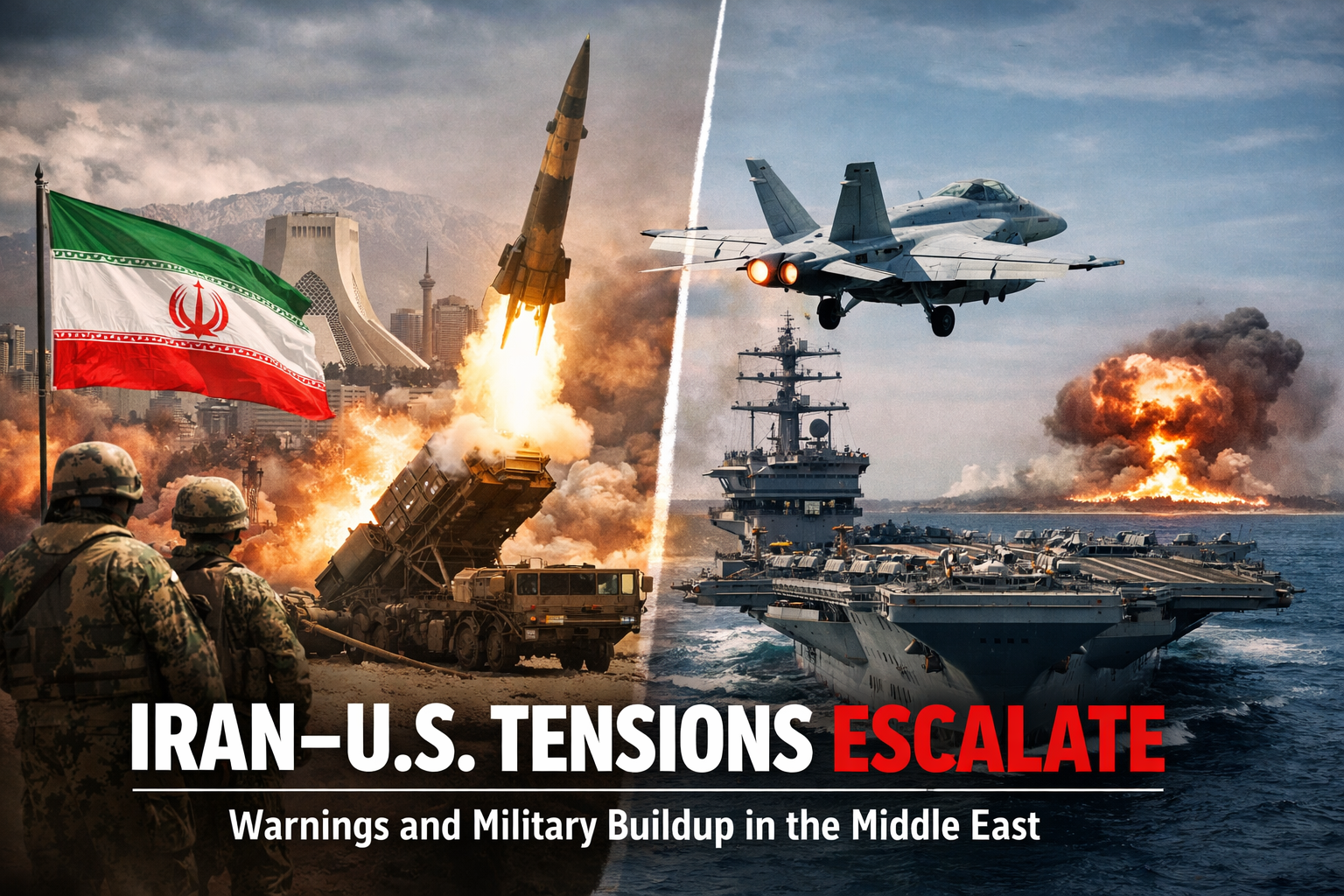
Recent warnings from Iranian officials, combined with visible U.S. military deployments and sharp political rhetoric, have raised fears that a miscalculation or unexpected incident could ignite a broader conflict. While no direct war has begun, the current standoff represents one of the most dangerous moments in Iran–U.S. relations in recent years.
This article provides a detailed examination of the crisis, tracing its historical roots, analyzing current developments, exploring military and political dynamics, and assessing the potential consequences for regional and global stability.
Historical Background of Iran–U.S. Hostility
The 1979 Islamic Revolution
Iran–U.S. tensions did not emerge overnight. Prior to 1979, Iran and the United States maintained close relations under Shah Mohammad Reza Pahlavi. The U.S. viewed Iran as a strategic ally in the Middle East.
That relationship collapsed following the Islamic Revolution of 1979, which overthrew the Shah and brought a new revolutionary government to power. The subsequent U.S. embassy hostage crisis, during which 52 American diplomats were held for 444 days, permanently damaged diplomatic ties.
Decades of Sanctions and Distrust
Since then, U.S. policy toward Iran has largely focused on:
-
Economic sanctions
-
Diplomatic isolation
-
Military containment
Iran, for its part, has accused the U.S. of:
-
Interfering in its sovereignty
-
Supporting hostile regional rivals
-
Waging economic warfare
This cycle of accusation and retaliation has defined relations for more than four decades.
The Nuclear Issue and Its Impact
Iran’s Nuclear Program
One of the most persistent flashpoints has been Iran’s nuclear program. Tehran insists its nuclear activities are peaceful and intended for civilian energy and research. Washington and its allies, however, have long feared the program could lead to nuclear weapons development.
The Nuclear Deal and Its Collapse
In 2015, Iran and world powers signed the Joint Comprehensive Plan of Action (JCPOA), commonly known as the Iran nuclear deal. The agreement limited Iran’s nuclear activities in exchange for sanctions relief.
However, the U.S. withdrawal from the deal in 2018 and the re-imposition of harsh sanctions significantly escalated tensions. Iran gradually reduced its compliance, while diplomatic efforts to revive the agreement stalled.
The nuclear issue remains a central driver of the current crisis.
Recent Developments Raising Alarm
Iran’s Warning of “All-Out War”
In recent weeks, senior Iranian officials publicly warned that any military attack on Iran would be treated as an act of war, regardless of scale. This language marked a sharp escalation in rhetoric, signaling Tehran’s readiness to respond forcefully to any perceived aggression.
Iran’s leadership emphasized:
-
National sovereignty
-
Military preparedness
-
Deterrence against foreign intervention
U.S. Military Movements
The United States has increased its military presence in the region, including:
-
Naval deployments
-
Aircraft carrier movements
-
Enhanced surveillance operations
Washington describes these actions as defensive measures aimed at protecting allies, securing shipping routes, and deterring destabilizing actions.
Iran views the same actions as provocative and threatening.
The Role of Proxy Conflicts
Regional Power Struggles
Iran–U.S. tensions rarely play out directly. Instead, they are often expressed through proxy conflicts across the Middle East, including:
-
Iraq
-
Syria
-
Yemen
-
Lebanon
Iran supports various allied groups and governments, while the U.S. backs opposing forces or conducts counterterrorism operations.
Risk of Escalation
These proxy arenas increase the risk of accidental escalation. A single strike, misidentified target, or misinterpreted signal could spiral into direct confrontation.
Economic Warfare and Sanctions
Impact on Iran
U.S. sanctions have severely affected Iran’s economy, contributing to:
-
Currency devaluation
-
Inflation
-
Rising unemployment
-
Public dissatisfaction
Iranian leaders describe sanctions as a form of economic warfare aimed at weakening the state from within.
Global Economic Concerns
The crisis also threatens global markets, particularly energy supplies. Iran sits near key shipping routes, and any conflict could disrupt:
-
Oil exports
-
Global fuel prices
-
Trade routes
Markets closely monitor developments for signs of instability.
International Reactions and Diplomatic Efforts
Calls for Restraint
Global powers, including European nations, China, and Russia, have urged both sides to exercise restraint and pursue diplomatic solutions. International organizations warn that escalation could destabilize an already fragile region.
Diplomatic Channels Remain Open
Despite hostile rhetoric, diplomatic communication has not completely broken down. Back-channel negotiations and indirect talks continue, though progress remains slow and uncertain.
Military Balance and Strategic Calculations
Iran’s Capabilities
Iran possesses:
-
A large missile arsenal
-
Advanced drone technology
-
Regional allies capable of asymmetric warfare
Its strategy focuses on deterrence rather than conventional warfare.
U.S. Military Power
The United States maintains overwhelming conventional superiority, with advanced air, naval, and intelligence capabilities. However, U.S. military planners recognize that any conflict with Iran would be complex, costly, and unpredictable.
Public Opinion and Internal Pressures
Inside Iran
Iran faces internal challenges, including economic hardship and public frustration. Nationalist sentiment, however, often strengthens in response to external threats.
Inside the United States
In the U.S., policymakers must balance national security concerns with public war fatigue and political divisions. Any military action would face intense domestic and international scrutiny.
Possible Scenarios Ahead
1. Diplomatic De-escalation
Negotiations could reduce tensions, revive agreements, and prevent conflict.
2. Limited Military Exchange
A small-scale confrontation could occur without escalating into full war, though risks remain high.
3. Wider Regional Conflict
The worst-case scenario involves regional war affecting multiple countries and global markets.
Why This Crisis Matters Globally
The Iran–U.S. standoff is not a regional issue alone. Its consequences could include:
-
Global energy instability
-
Refugee crises
-
Heightened geopolitical polarization
-
Increased risk of great-power confrontation
Conclusion
Iran–U.S. tensions remain one of the most dangerous unresolved conflicts in international politics. While both sides insist they do not seek war, their actions, rhetoric, and strategic postures suggest a fragile balance maintained by deterrence rather than trust.
The coming months will be critical. Whether diplomacy prevails or escalation occurs will depend on decisions made in Washington, Tehran, and beyond. For now, the world watches anxiously, aware that a single misstep could reshape the Middle East — and the global order — for years to come.