Introduction
Scabies is a common but often misunderstood skin condition that affects millions of people worldwide every year. Despite being highly treatable, scabies continues to spread rapidly due to late diagnosis, misinformation, and close human contact. The condition causes intense itching, red rashes, and skin damage, significantly affecting quality of life.
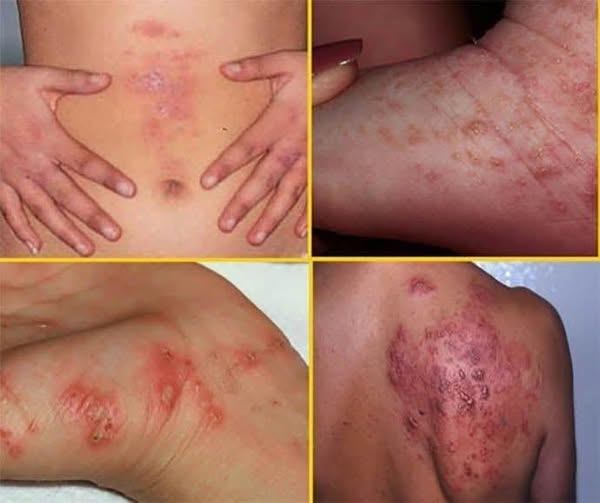
The images shown above display classic signs of scabies, including inflamed rashes, scratch marks, crusting, and involvement of common body areas such as the wrists, abdomen, back, and skin folds.
This article provides a comprehensive, educational explanation of scabies, including causes, symptoms, types, diagnosis, treatment options, complications, and prevention strategies.
⚠️ Medical Disclaimer
This content is for educational purposes only and does not replace professional medical advice. A qualified healthcare provider should be consulted for diagnosis and treatment.
What Is Scabies?
Scabies is a contagious skin infestation caused by a microscopic parasite known as Sarcoptes scabiei var. hominis. These mites burrow into the outer layer of human skin, where they live, feed, and lay eggs.
The symptoms of scabies are caused not by the mite itself, but by the body’s allergic immune reaction to:
-
The mites
-
Their eggs
-
Their waste products
How Scabies Develops in the Body
-
The mite transfers through close skin contact
-
A female mite burrows into the skin
-
Eggs are laid inside the burrow
-
Eggs hatch into larvae
-
Larvae mature into adult mites
-
Immune system reacts → rash and itching develop
⏱ Symptoms usually appear 2–6 weeks after first exposure, but reinfection can cause symptoms within days.
Visual Signs and Skin Appearance
The images show several key visual features of scabies:
-
Red or pink inflamed rash
-
Small bumps or papules
-
Crusting and scaling
-
Thickened skin in severe cases
-
Scratch marks from intense itching
-
Irregular patches across multiple body areas
Commonly Affected Areas:
-
Wrists and hands
-
Abdomen and waistline
-
Back and shoulders
-
Armpits
-
Groin and genitals
-
Inner thighs
-
Under breasts
This distribution pattern strongly supports scabies rather than allergies or fungal infections.
Types of Scabies
1. Classic Scabies
-
Most common form
-
Severe itching, especially at night
-
Red rash with small bumps
-
Usually fewer mites (10–15 total)
2. Crusted Scabies (Norwegian Scabies)
Some areas in the image may suggest this severe form.
Characteristics:
-
Thick crusted skin lesions
-
Thousands to millions of mites
-
Extremely contagious
-
May have less itching
-
Seen in:
-
Elderly individuals
-
Immunocompromised patients
-
Disabled or bedridden individuals
-
Symptoms of Scabies
Primary Symptoms
-
Intense itching (worse at night)
-
Burning or stinging sensation
-
Red rash
-
Small blisters or bumps
-
Crusting and scaling
-
Skin thickening in chronic cases
Secondary Symptoms
-
Open wounds from scratching
-
Bacterial skin infection
-
Pus or oozing
-
Fever (if infection spreads)
-
Swollen lymph nodes
Why Is Itching Worse at Night?
Scabies mites are more active in warm conditions, especially at night. Heat from blankets and increased mite movement intensify skin irritation and itching, often disrupting sleep.
How Scabies Spreads
Scabies spreads through direct and prolonged skin-to-skin contact, including:
-
Living in the same household
-
Sexual contact
-
Sharing bedding, towels, or clothing
-
Care facilities and nursing homes
-
Crowded environments
❌ Scabies is NOT caused by poor hygiene
Who Is Most at Risk?
-
Children
-
Elderly individuals
-
Nursing home residents
-
Prison populations
-
Refugee camps
-
Crowded households
-
People with weakened immune systems
Diagnosis of Scabies
Doctors diagnose scabies using:
-
Physical skin examination
-
Dermatoscope inspection
-
Skin scraping for microscopic analysis
-
Identification of mites, eggs, or burrows
⚠️ Scabies cannot be confirmed by image alone. A medical evaluation is required.
Treatment Options (Medical Overview)
Common Treatments:
-
Permethrin 5% cream (topical)
-
Oral ivermectin (for severe or crusted scabies)
Important Treatment Rules:
-
Treat all household members at the same time
-
Repeat treatment after 7 days if required
-
Wash clothes, towels, and bedding in hot water
-
Clean mattresses and furniture
-
Trim fingernails to reduce scratching damage
⚠️ Post-treatment itching may last 2–4 weeks and does not mean treatment failure.
Complications If Left Untreated
-
Severe skin infection
-
Cellulitis
-
Abscess formation
-
Sepsis (rare)
-
Kidney complications (post-streptococcal)
-
Chronic skin damage and scarring
How to Prevent Scabies
-
Avoid direct contact with infected individuals
-
Early diagnosis and treatment
-
Treat close contacts simultaneously
-
Maintain clean living environments
-
Health education in crowded communities
When to See a Doctor Immediately
Seek urgent medical care if:
-
Thick crusts develop
-
Rash spreads rapidly
-
Fever or pus appears
-
Infants or elderly are affected
-
Immune system is weakened
Final Summary
Scabies is a highly contagious but curable skin condition caused by microscopic mites. The images shown display classic and severe signs of scabies, including widespread rash, crusting, and skin inflammation.
✔ Early diagnosis is essential
✔ Proper treatment prevents spread
✔ Scabies is not caused by poor hygiene
✔ Medical confirmation is required